Something changed in the last two years.
Work didn’t just get faster. It got relentless in a different way. New tools every quarter. New workflows to learn. New pressure to stay current, adapt faster, do more with the same hours. AI was supposed to make things easier. For a lot of people, it made things more exhausting.
Burnout reports in Q1 2026 were up 65% compared to the same period in 2025 (Glassdoor). A May 2026 Monster report found that 59% of employees feel their job actively damages their mental health. Nearly 1 in 4 professionals now face severe risk of disengagement, a direct consequence of how AI tools are being rolled out, not adopted.
That’s not a personal failing. That’s an environment that’s been running too hot for too long.
Why digital rest doesn’t actually rest you
After a day of screens, most people reach for more screens.
Phone, TV, social media, YouTube. It feels like downtime. It isn’t. Your brain is still processing: images, text, notifications, choices, comparisons. The medium changes but the mode stays the same: consuming and reacting.
There’s a difference between passive rest (not doing much) and active rest, giving your nervous system something to do that actually interrupts the pattern. Something rhythmic, physical, and low-stakes. Something that doesn’t ask your brain to adapt, learn, or perform.
The research on this is consistent: physical, repetitive activities with immediate, visible results activate the calming part of your nervous system in a way that passive screen consumption doesn’t.
Your hands move. Your eyes focus on something close. The same part of your brain that’s been running interpretations and decisions all day finally gets a break, not because you stopped, but because you gave it something easier.
The specific problem with AI work fatigue
This isn’t ordinary work stress.
Ordinary stress is about volume, too many tasks, not enough time. AI-era stress has an added layer: cognitive impermanence. Tools change. Skills you learned six months ago are already being replaced. The goal line moves. There’s an undercurrent of “am I keeping up?” that runs beneath everything else.
That kind of fatigue is harder to switch off because it’s not just about completing work. It’s about a constant background assessment of where you stand. Even when you stop working, part of your brain keeps running that loop.
Passive digital rest doesn’t interrupt it. Watching something, scrolling, even gaming still keeps you in a reactive, evaluative mode. The loop continues underneath.
What does interrupt it is a task with no learning curve, no performance metric, and no comparison possible. Something where you can’t be behind. Something that doesn’t update.
Why coloring works specifically
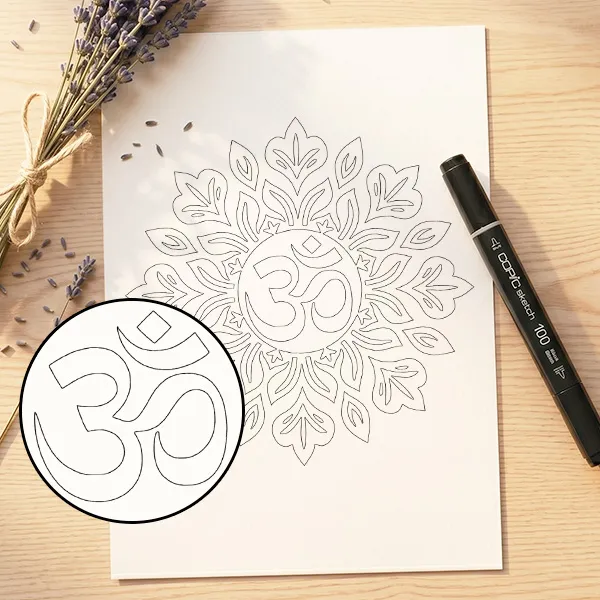
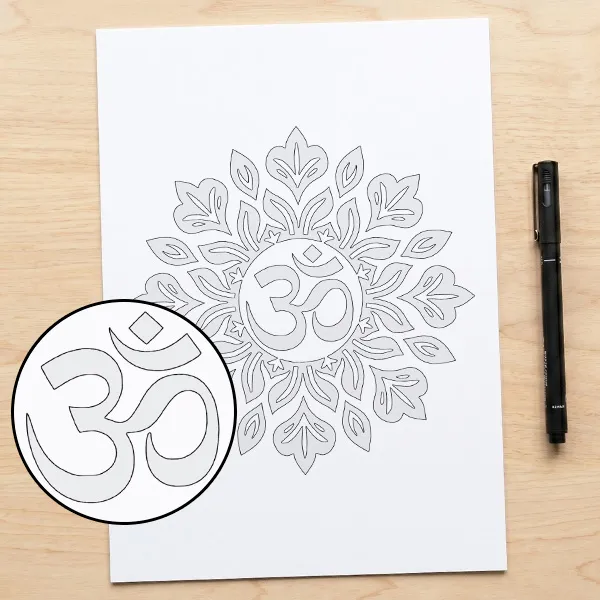
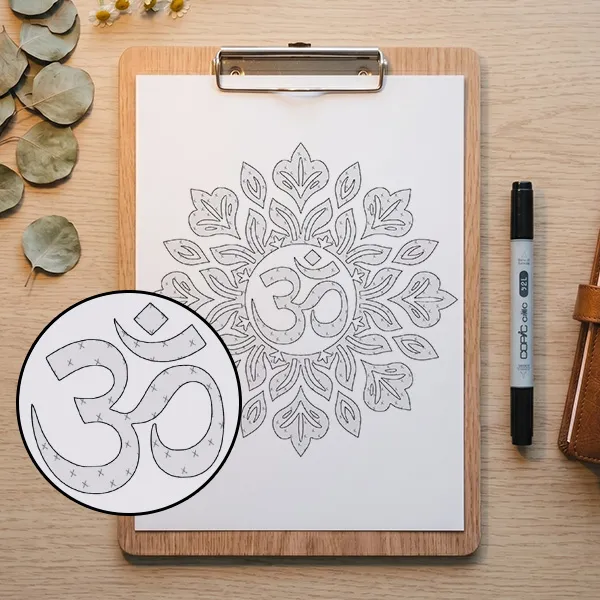
Monochrome coloring is low-tech by design, and that’s the point.
- No new skill to acquire
- No comparison to anyone else’s result
- No version to stay current with
- No decision beyond: which color today
The hand moves in slow, repetitive strokes. The eyes follow close, quiet detail. The mind narrows to a single, immediate task, and the part of your brain that’s been performing and adapting all day finally stops.
Why one color matters here
A traditional coloring book with 60 pencils still asks you to make choices: which shade, does this work, am I doing it right. That’s the same pattern AI work activates: continuous assessment. One color removes it entirely. Pick it before you sit down. After that, nothing to evaluate.

This isn’t about coloring being “productive” or a new skill to add to your repertoire. It’s the opposite. It’s deliberately unproductive time, with a visible result that requires nothing from you.

What this looks like in practice
The 20-minute rule. Set a timer. Sit down with one page, one color, no phone. You don’t have to finish the page. The goal is time in, not output. Most people feel the shift within the first ten minutes.
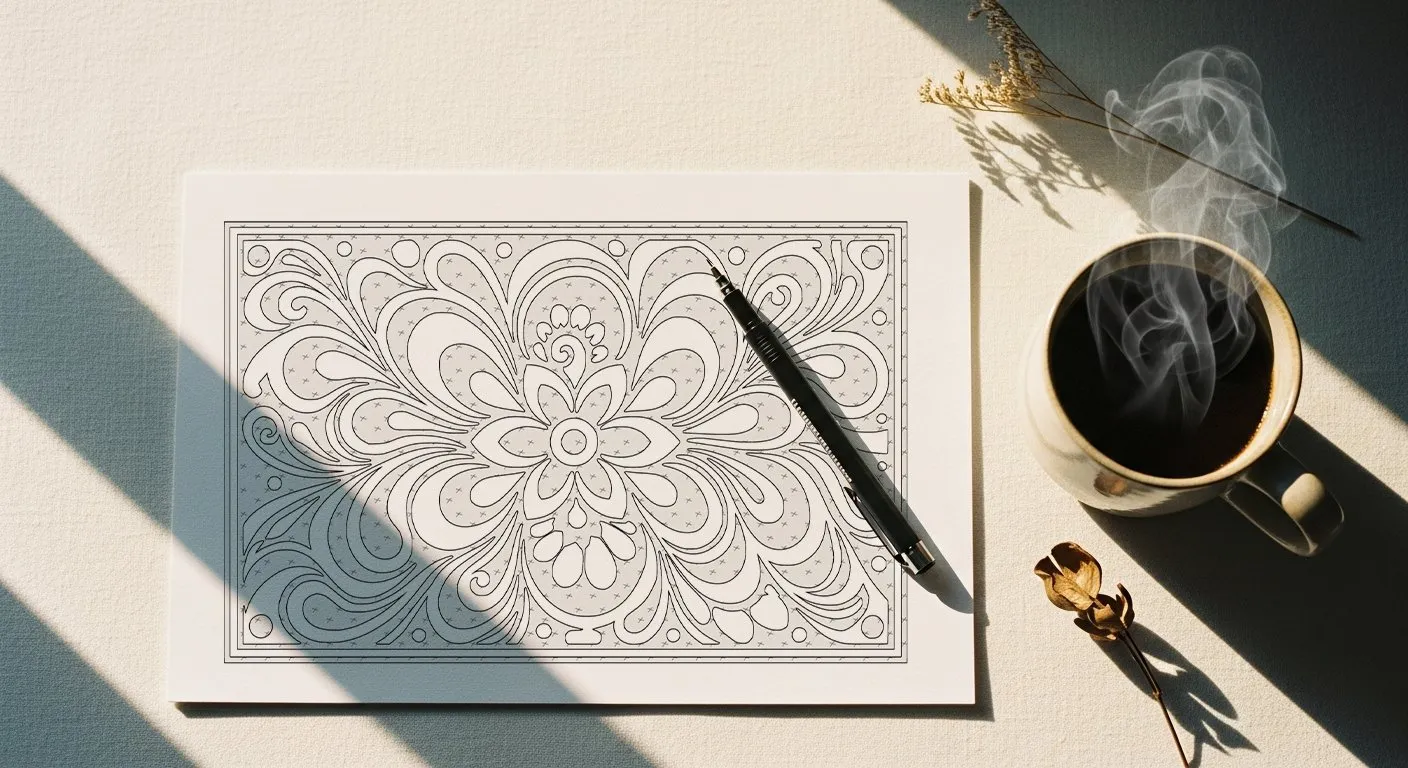
Make it analog-only. If you have a paper option, use it instead of a tablet. The physical quality matters: the texture of the paper, the weight of the pencil, the way the color builds up. These tactile details are part of why it works.
Keep the setup stupidly simple. The more friction between you and starting, the more likely your brain will find a reason to scroll instead. One coloring book. One pencil or marker. Already out. Already ready.
Do it before dinner, not after. The transition from work to evening is when the loop is still active, and that’s when interrupting it has the most effect. Wait until after dinner and your brain has already found its default, usually a screen, and pulling it out of that takes more effort than it should.

Start with something free
You don’t need to commit to anything to find out if this works for you.
Download 15 free pages: high-res, print-ready, works on paper or iPad. One page. One color. Twenty minutes. No account, no card.
If it does what it’s supposed to do, you’ll know within the first session.
Which collection works for this
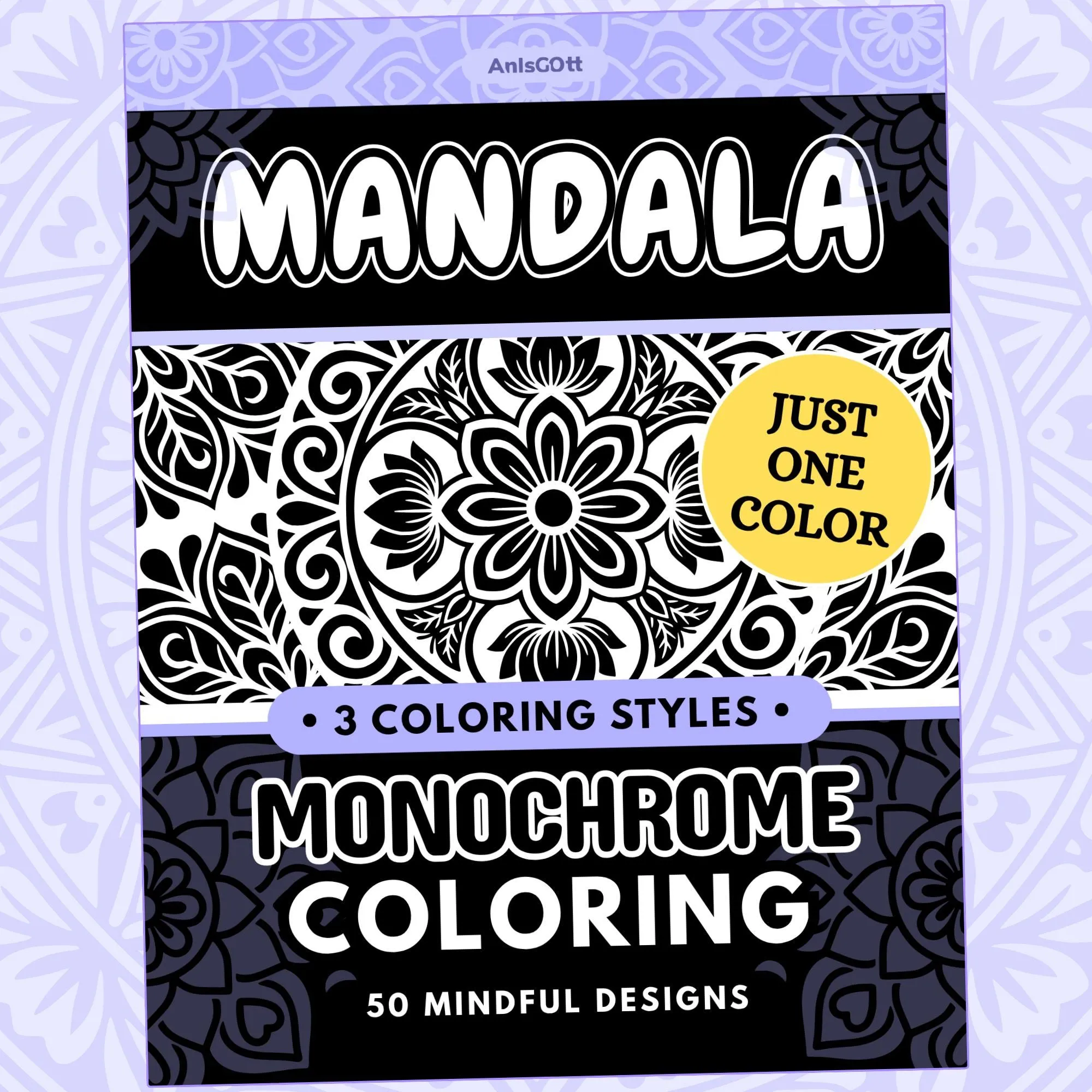
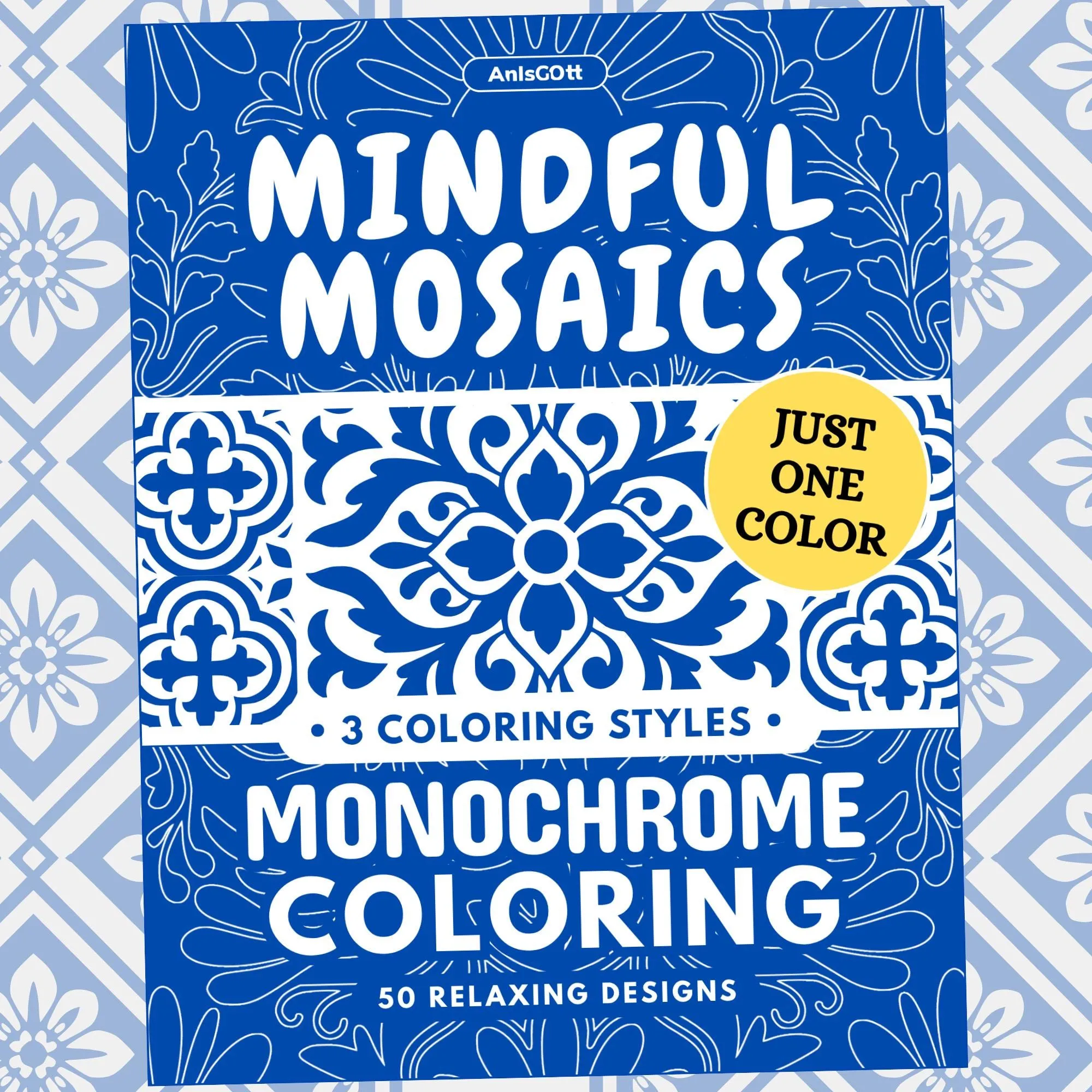
Mindful Mosaics: ornamental patterns: damask, arabesque, Art Deco geometric. Highly structured and repetitive. Your brain knows exactly what to do next, which is what you need when your decision-making is depleted.
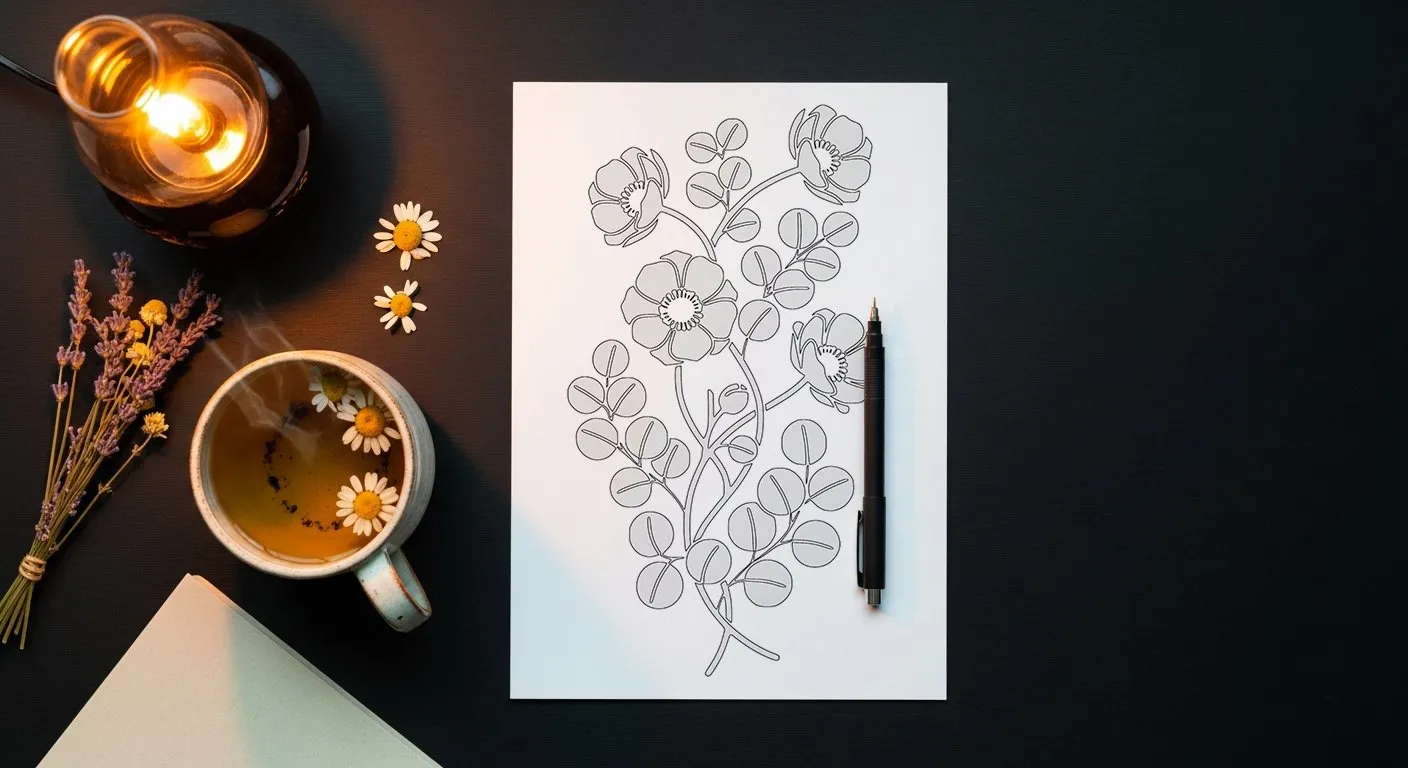
Wabi-Sabi: Japanese-inspired illustrations: cranes, koi, bonsai, geishas, sea turtles. Detailed and visually rich without being complex. Grounded in a visual language that has been associated with quiet focus for a long time.
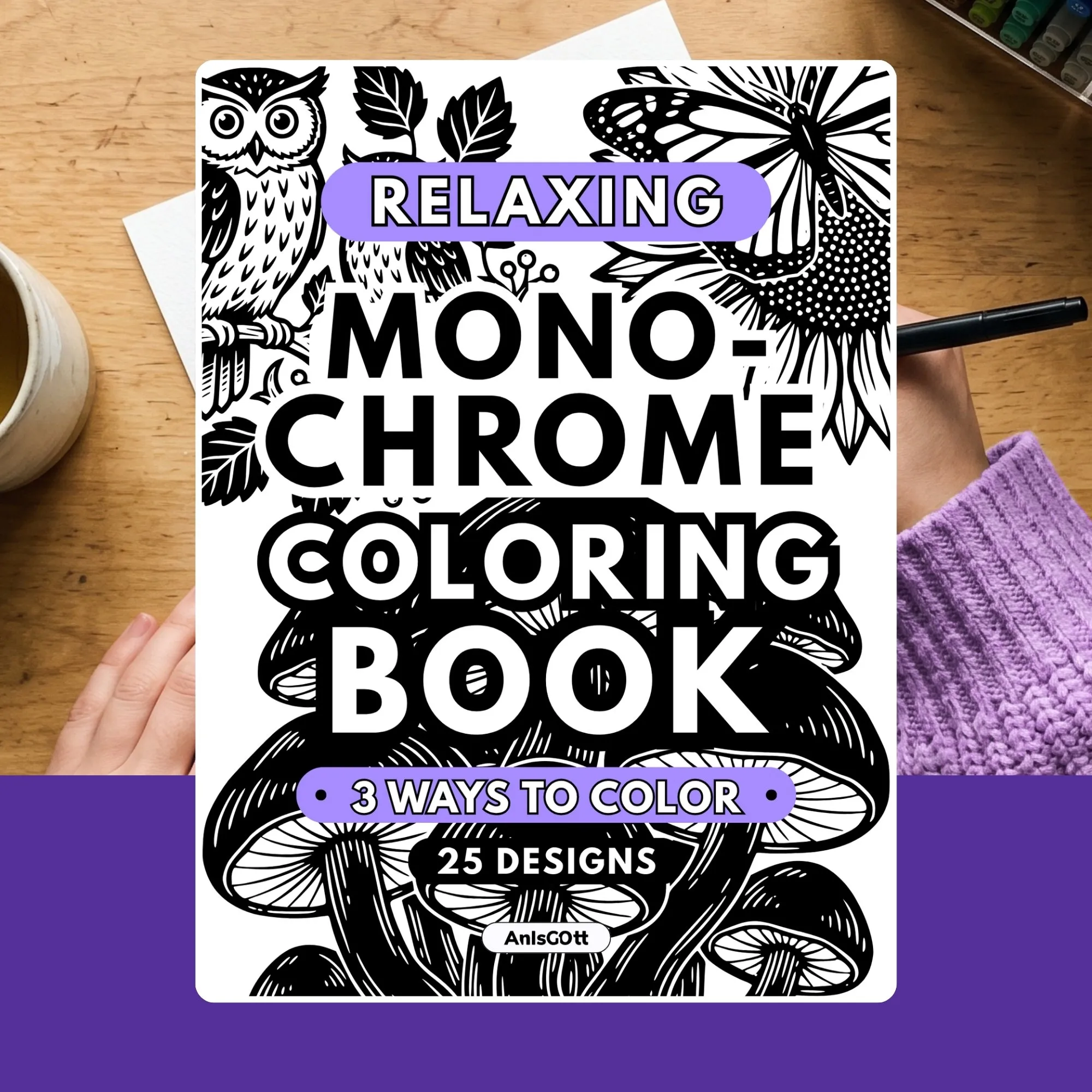
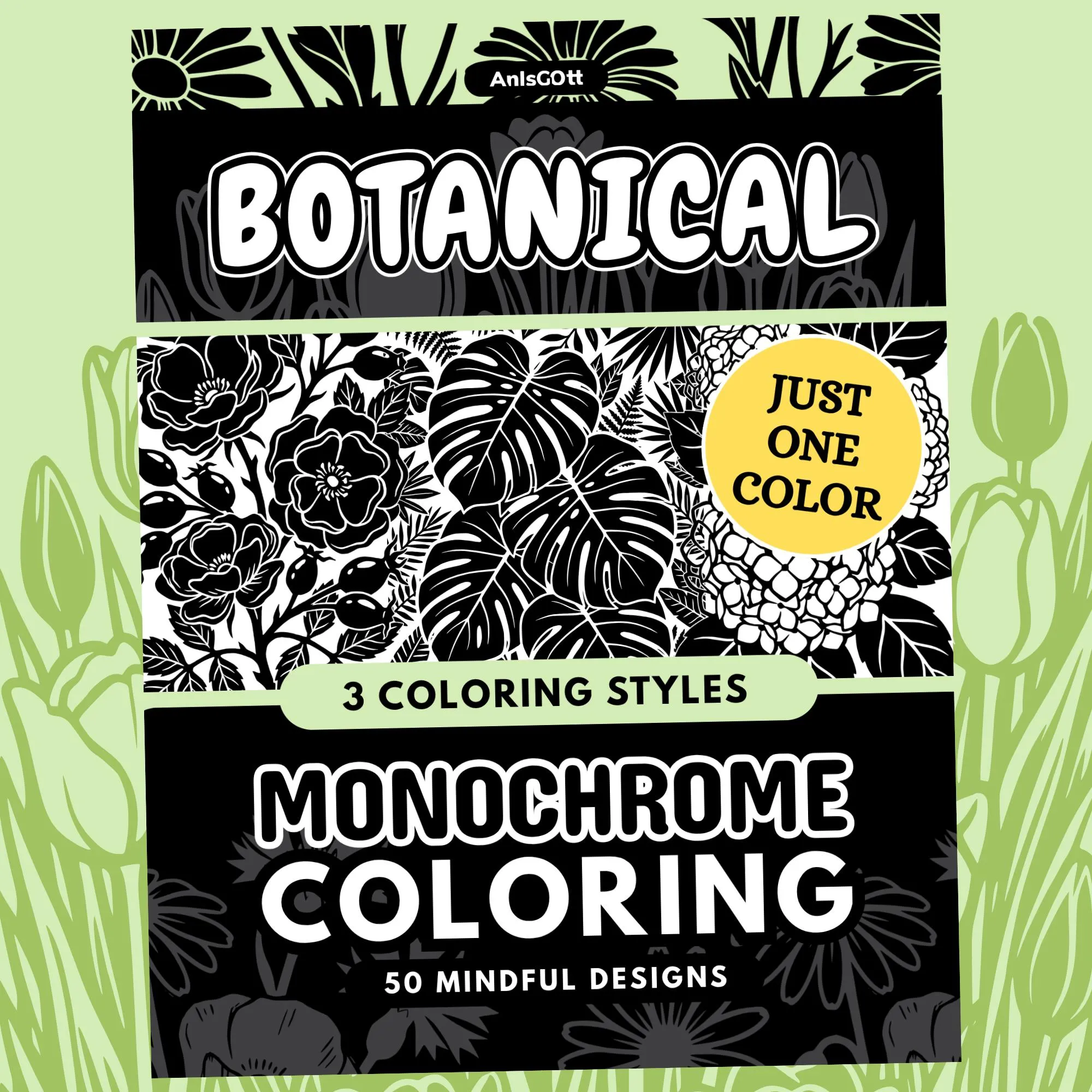
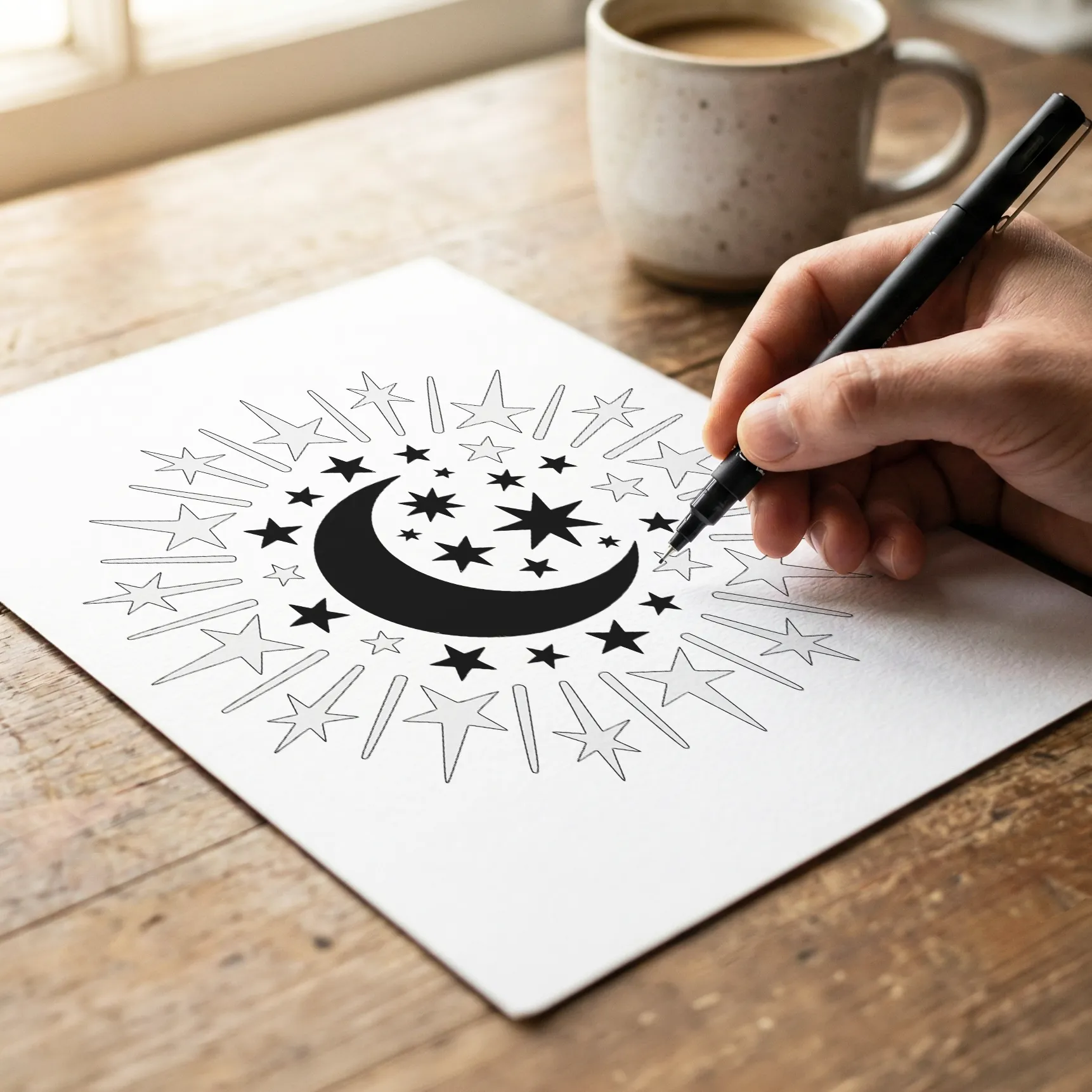
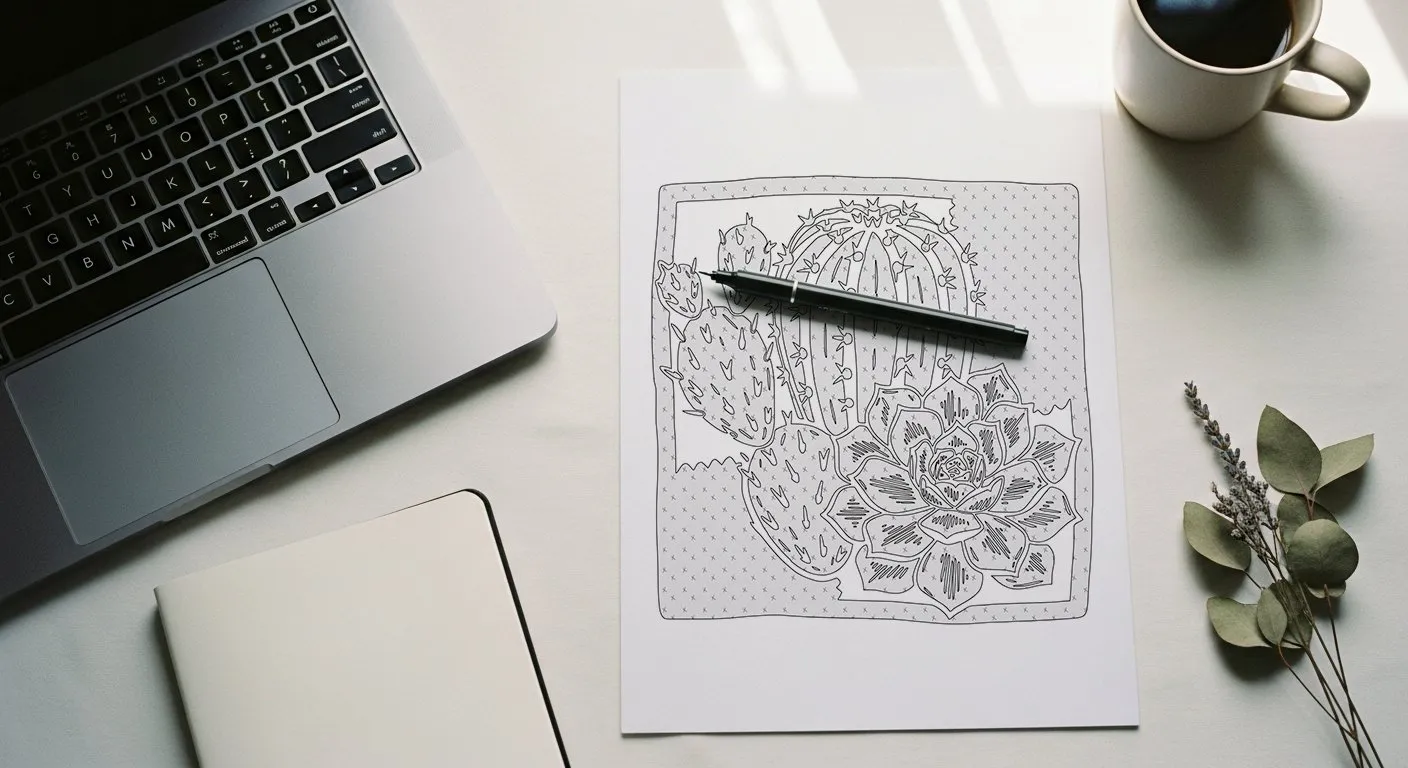
Relaxing Monochrome: bold graphic illustrations with large areas to fill: roses, seahorses, mermaids, cacti. Woodcut-style. Satisfying to fill, visually strong, and the large sections mean your hand can move without having to navigate tiny details.
Frequently asked questions
Is this a form of digital detox? Sort of, but that framing misses the point. Digital detox implies deprivation, going without something. This is more about giving your brain an active analog input instead of a passive digital one. The distinction matters: replacement works better than removal.
I can’t sit still for 20 minutes. Start with 10. Neuroscience suggests flow requires at least 10 to 15 minutes of uninterrupted focus before the brain fully shifts. So 10 is a realistic floor, not a shortcut. The resistance usually fades once you’re actually in it. If 20 minutes still feels impossible after a few tries, that’s information: the fatigue may be more acute than a single session can address.
Isn’t this just procrastination? It’s scheduled rest, not avoidance. The goal is to arrive at the next work session with more capacity, not to avoid the work. There’s a difference between procrastination (deferring something you know you should do) and intentional recovery (doing something that restores your ability to do the thing).
What if I’m too tired to even start? That’s usually the point. The sessions where starting feels hardest tend to be the ones where the payoff is biggest. You don’t have to feel motivated. Put the page in front of you and pick up the pencil. The rest tends to follow.
Can I listen to something while I do it? Yes, and for many people it actually helps. Ambient music, instrumental, white noise, or even a podcast or audiobook in the background : whatever lets your hands stay in the rhythm without your attention fragmenting. Some people find language-heavy audio keeps the verbal part of their brain too active; others (especially if they have ADHD or an anxious mind) find that a podcast or familiar show gives just enough anchor to settle in. Try both and see which version of you actually sits down and colors.