By 9 AM you’ve already decided what to wear, what to eat, whether to answer that message now or later, what to say in the meeting, which route to take, whether that email was passive-aggressive or just short.
By noon you’re tired in a way coffee doesn’t touch.
By evening, someone asks what you want for dinner and something in you genuinely cannot answer.
This is decision fatigue, and it’s not a personality flaw. It’s biology.
What decision fatigue actually is
There’s a reason judges hand down harsher sentences before lunch. There’s a reason you can draft a presentation at 9 AM and can’t form a coherent sentence by 4 PM. The mental resource you use to make decisions is finite, and the more of it you spend, the worse the decisions get.
The more decisions you make, the worse you get at making them. Judgment degrades. Impulse control drops. The mental muscle fatigues.
The problem isn’t that we’re weak. It’s that we live in an environment that wasn’t designed for the number of decisions modern life demands. Barack Obama and Mark Zuckerberg both became famous for their capsule wardrobes, the same outfit every day. Not a fashion statement. An energy strategy: eliminate one category of decisions entirely to protect cognitive capacity for what actually matters. Fewer choices in one area means more mental bandwidth for everything else.
You can’t do that for everything. But you can build a small daily practice that signals your brain: this is the off switch.
Why most “relaxing” activities don’t help
Here’s the trap with traditional downtime.
You sit down to watch something and spend 20 minutes scrolling Netflix before picking anything. You open Instagram and start making judgments: like, skip, reply, ignore. You pick up a coloring book and open a box of 60 pencils and stare at a blank page wondering which shade of green the leaves should be.
More choices, more micro-decisions, more of the exact thing that wore you out in the first place.
 One color. That’s the only decision you need to make.
True rest means giving the decision-making part of your brain a genuine break, not switching it to a different task, but turning it off.
For that, you need something that removes choice entirely.
The one-color rule
Monochrome coloring works because it reduces the entire session to a single upfront decision: which color today.
That’s it. After that, there’s nothing to figure out. The design is already there. The structure tells you where to go next. Your hand moves, your eyes focus, and the part of your brain that’s been running since morning finally goes quiet.
This isn’t a workaround. It’s the point. The constraint is what makes it work.
This matches the psychological concept of flow: real rest needs a task structured enough to hold your attention but open enough to let your hands move on autopilot. Too easy and you get bored. Too complex and you get anxious. One color on an intricate design lands right in that middle band.
The one-color rule in practice Pick your color before you sit down, not after. Keep it with the coloring book. Warm tones (rust, terracotta, olive) feel grounding. Cool tones (slate, sage, lavender) feel calming. Neither is wrong.
How to set up a decision-free wind-down
The goal is to remove as many choices as possible before you even start. That way the session requires zero mental energy to begin.
Keep it in one place. A corner of your desk, a basket by the couch, wherever you’ll actually use it. The ritual of reaching for the same spot is part of the signal.
Pre-set your color. Cap on. Ready. No rummaging through options when your brain is already depleted.
Choose a playlist in advance, or silence. Ambient, lo-fi, or quiet are a solid default: for many people, language keeps the evaluating part of the brain running, which is the opposite of what you want. But if a familiar podcast or show helps you settle rather than distracts, use it. The goal is whatever keeps you at the page without adding decisions. Decide once, use it every time.
Put your phone face-down or in another room. Not forever. Just for 20 minutes.
Don’t aim to finish the page. Completion is another goal, and goals require the decision-making part of your brain. The target is time in the practice, not output.

If anxiety is also in the mix
Decision fatigue and anxiety aren’t the same thing, but they feed each other.
Anxiety increases the number of decisions you perceive, because anxiety rehearses problems and generates options and contingencies that don’t need to exist yet. A brain in anxiety mode is essentially making decisions about hypothetical futures all day. By evening, it’s not just tired from real decisions. It’s tired from imaginary ones too.
If you recognize that pattern, this post on coloring for anxiety is worth reading. The mechanism is the same one color, repetitive motion, no way to get it wrong, just a different way in.
What’s different about the decision fatigue angle is when it hits. Anxiety can spike at any time. Decision fatigue accumulates, and it’s typically worst in the late afternoon and evening. That’s the window where this practice is most effective.

Start tonight (before you overthink it)
The irony of decision fatigue is that “starting a new habit” is itself a decision, and your depleted brain will argue against it.
So don’t start a habit. Just try it once.
Download 15 free pages: high-res, ready to print or use on an iPad. No account, no credit card. Pick one. Pick a color. Set a timer for 20 minutes.
See how you feel when it goes off.
Which collection fits
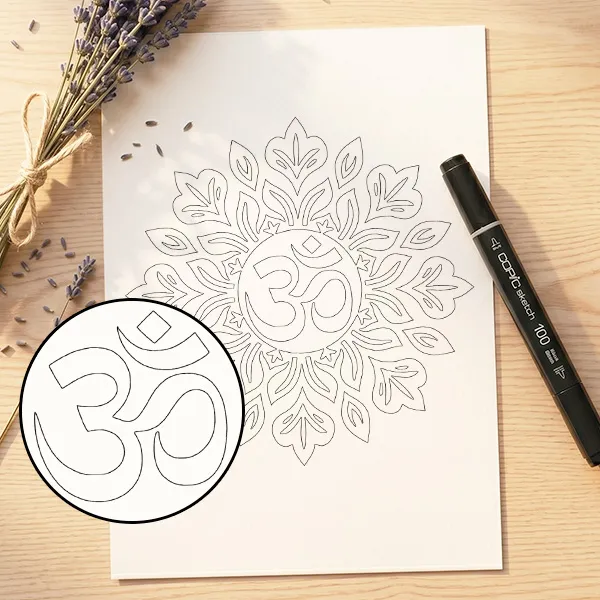
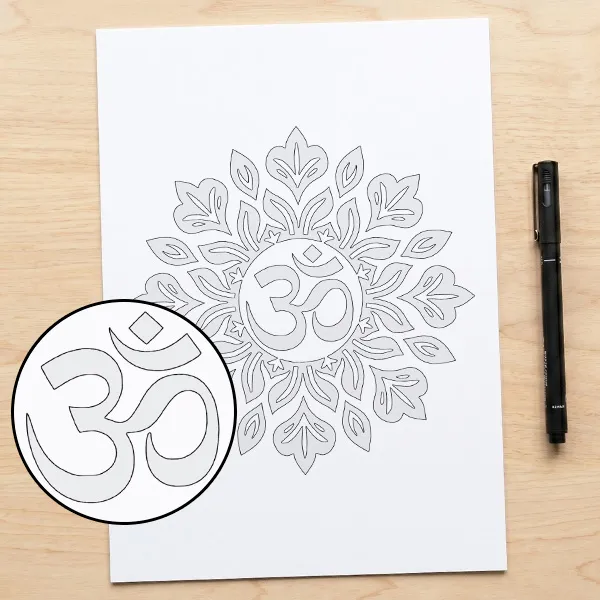
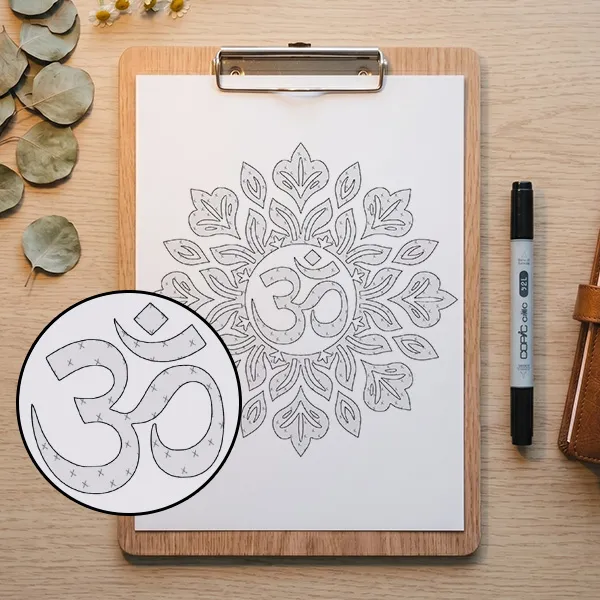
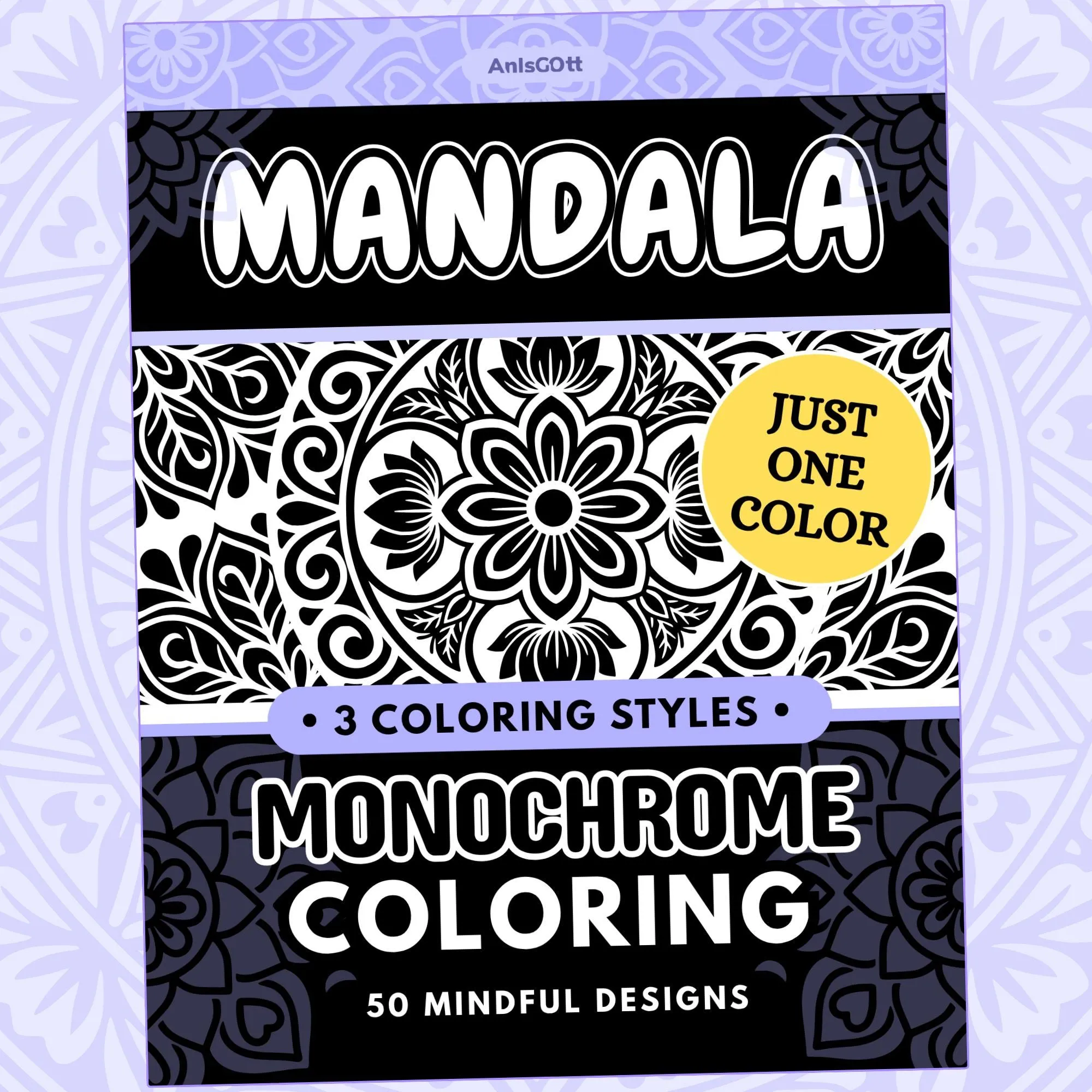
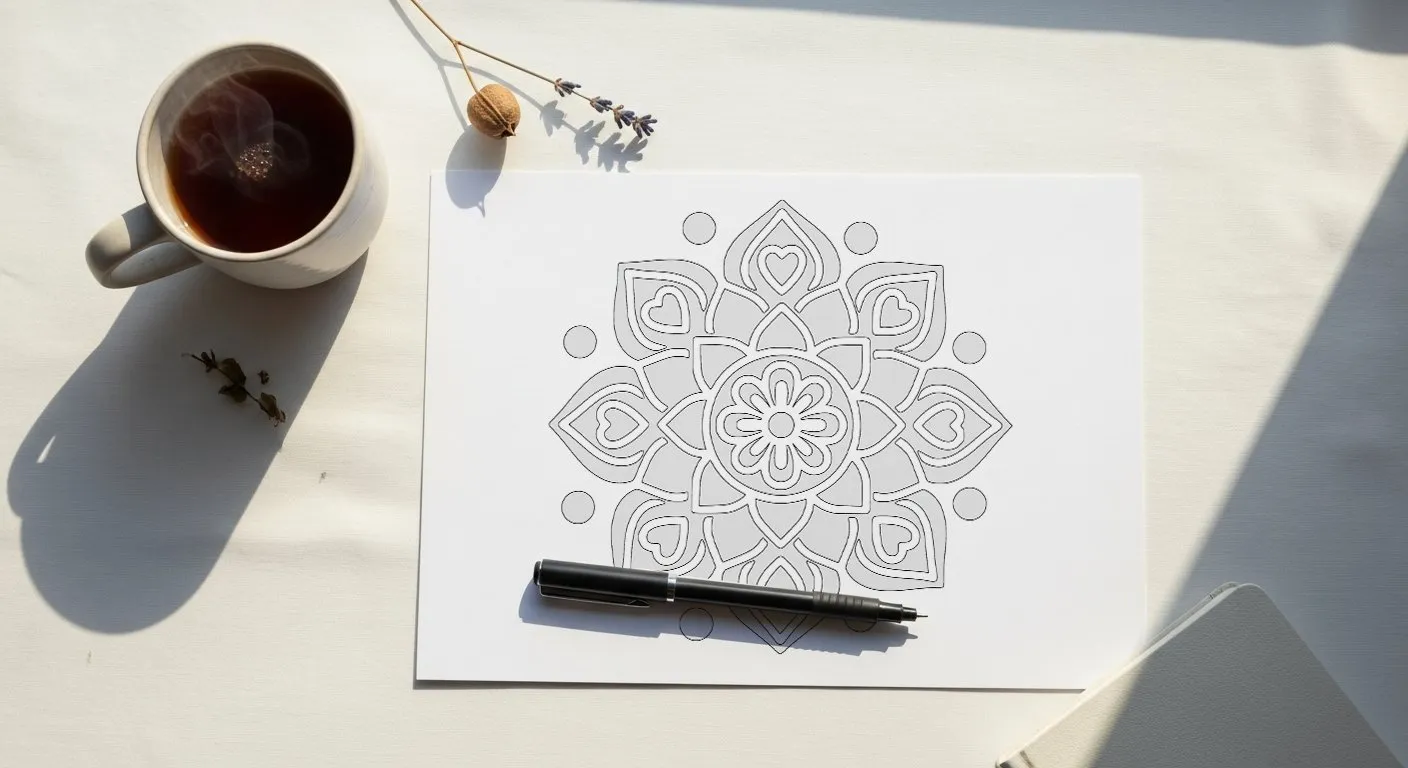
Mandala Monochrome: a natural starting point. Mandalas come in different levels of detail, so you can pick something simple for a short session or more intricate when you want to go deeper. The circular symmetry does a lot of the visual work for you.
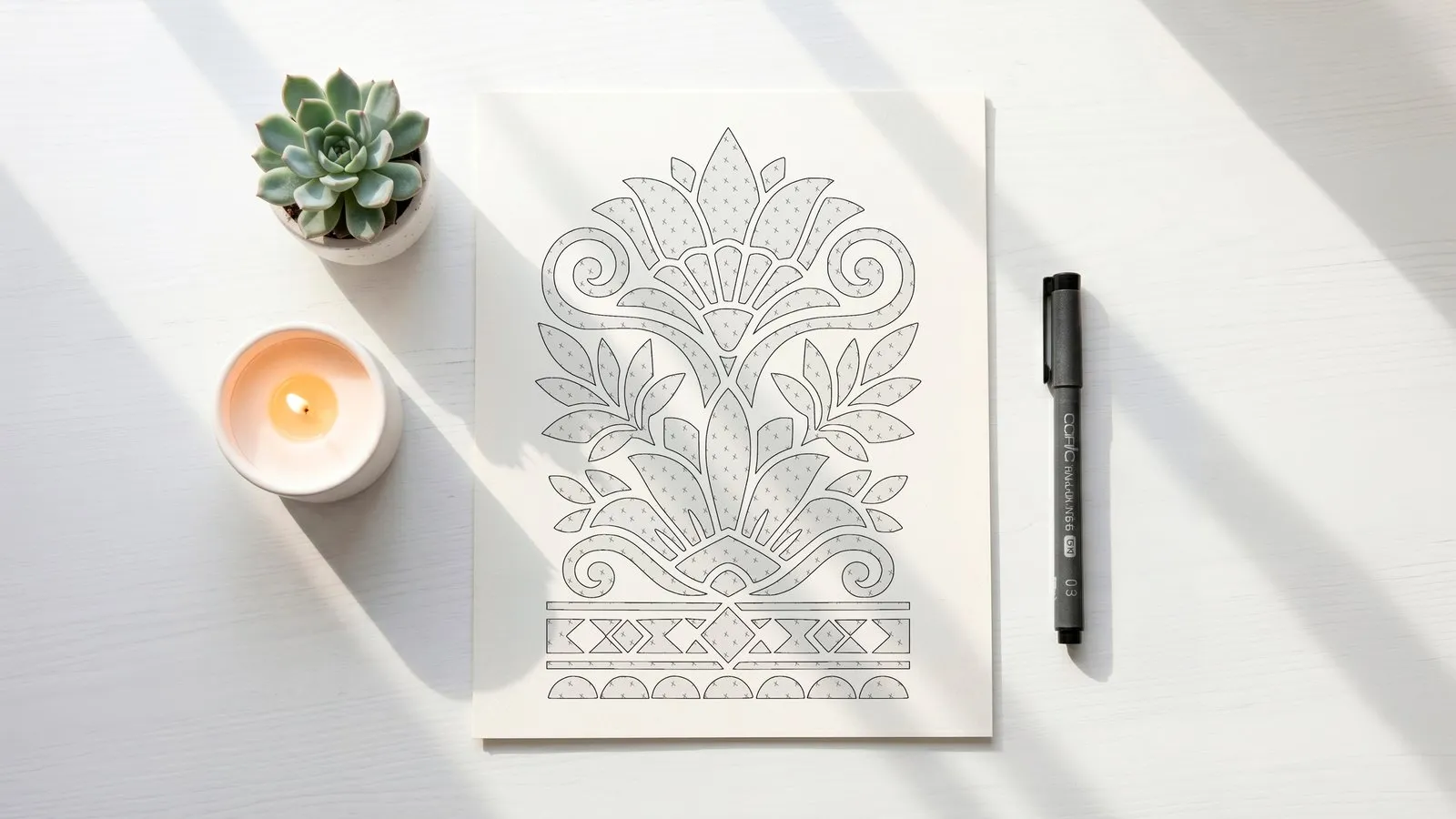
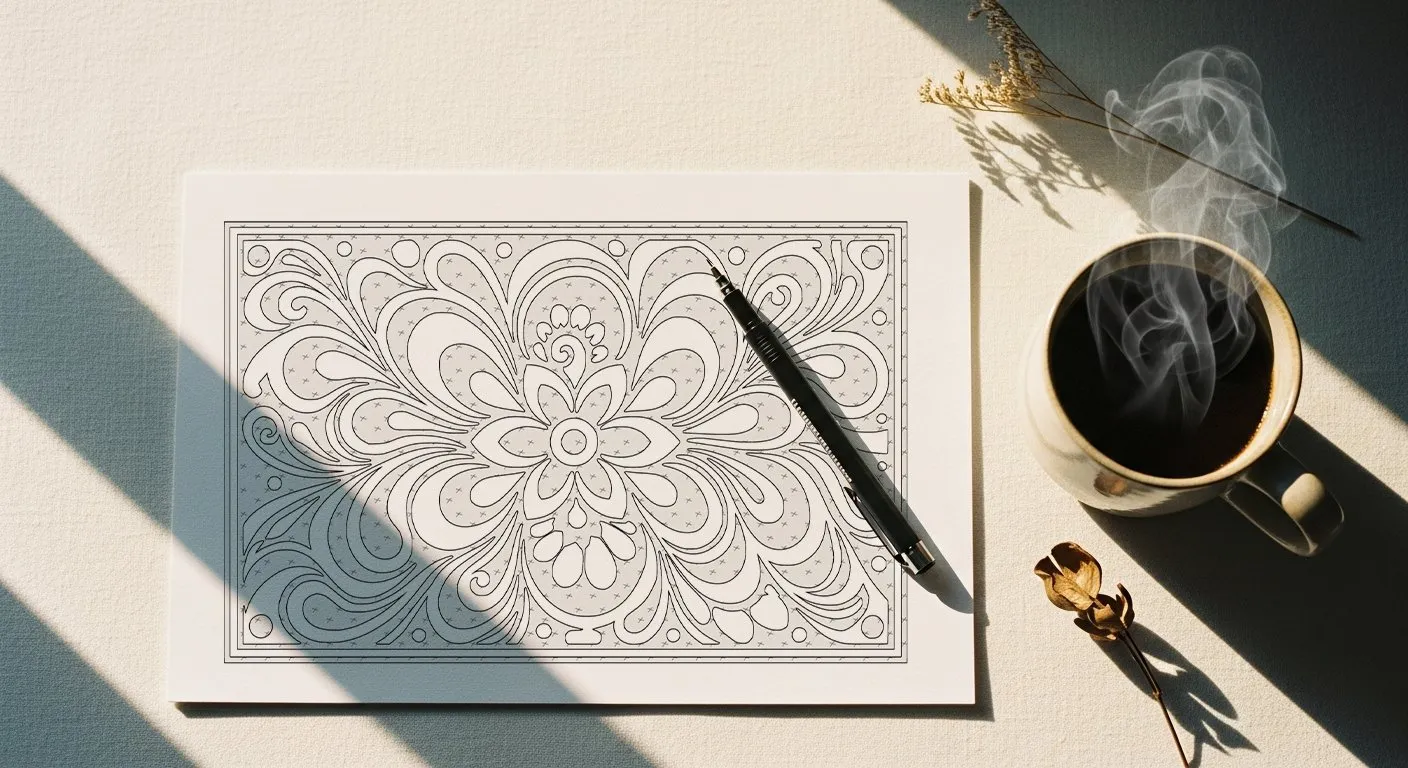
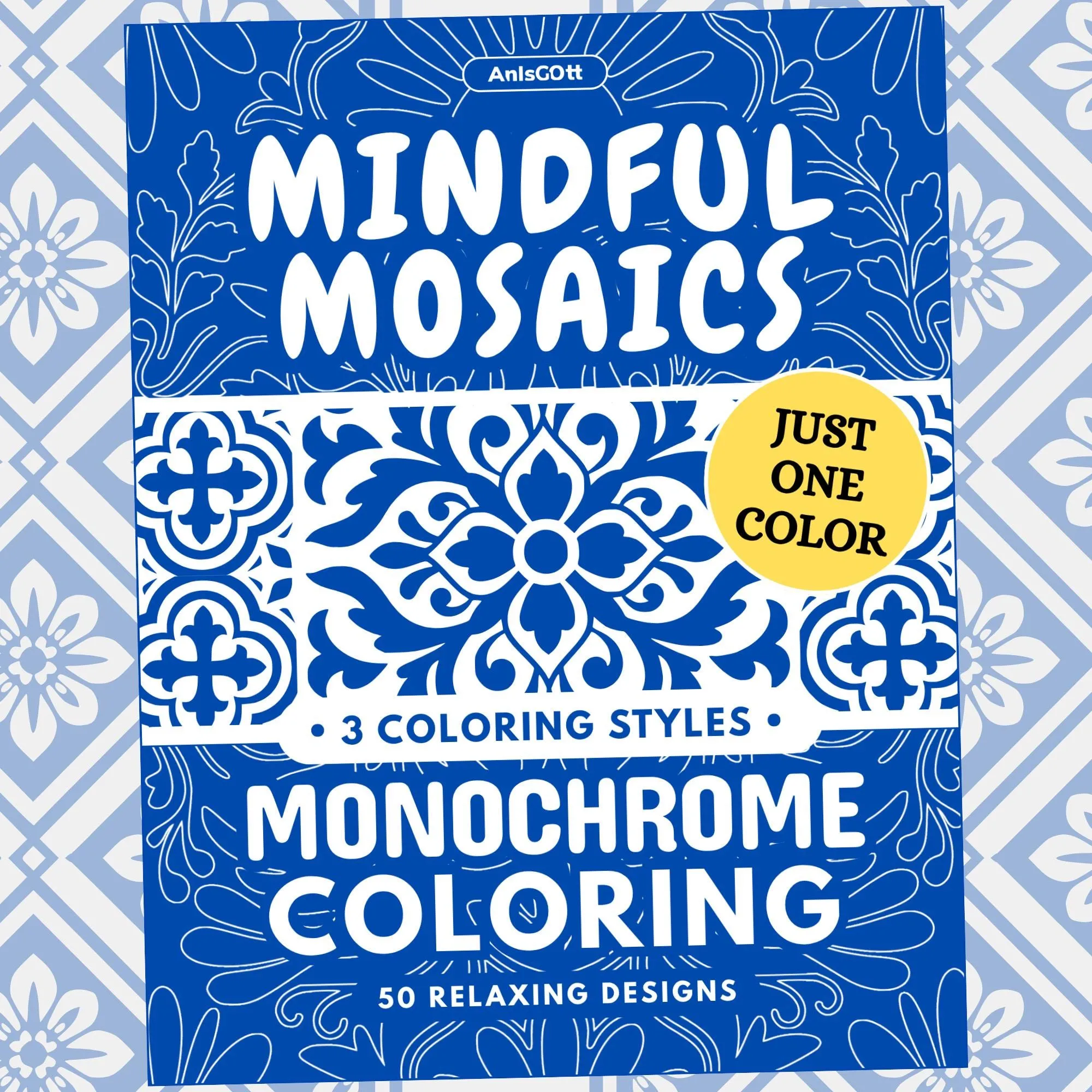
Mindful Mosaics: ornamental and geometric patterns: damask, Art Deco, arabesque. Highly structured and symmetrical. The pattern tells your hand where to go next without you having to think about it.
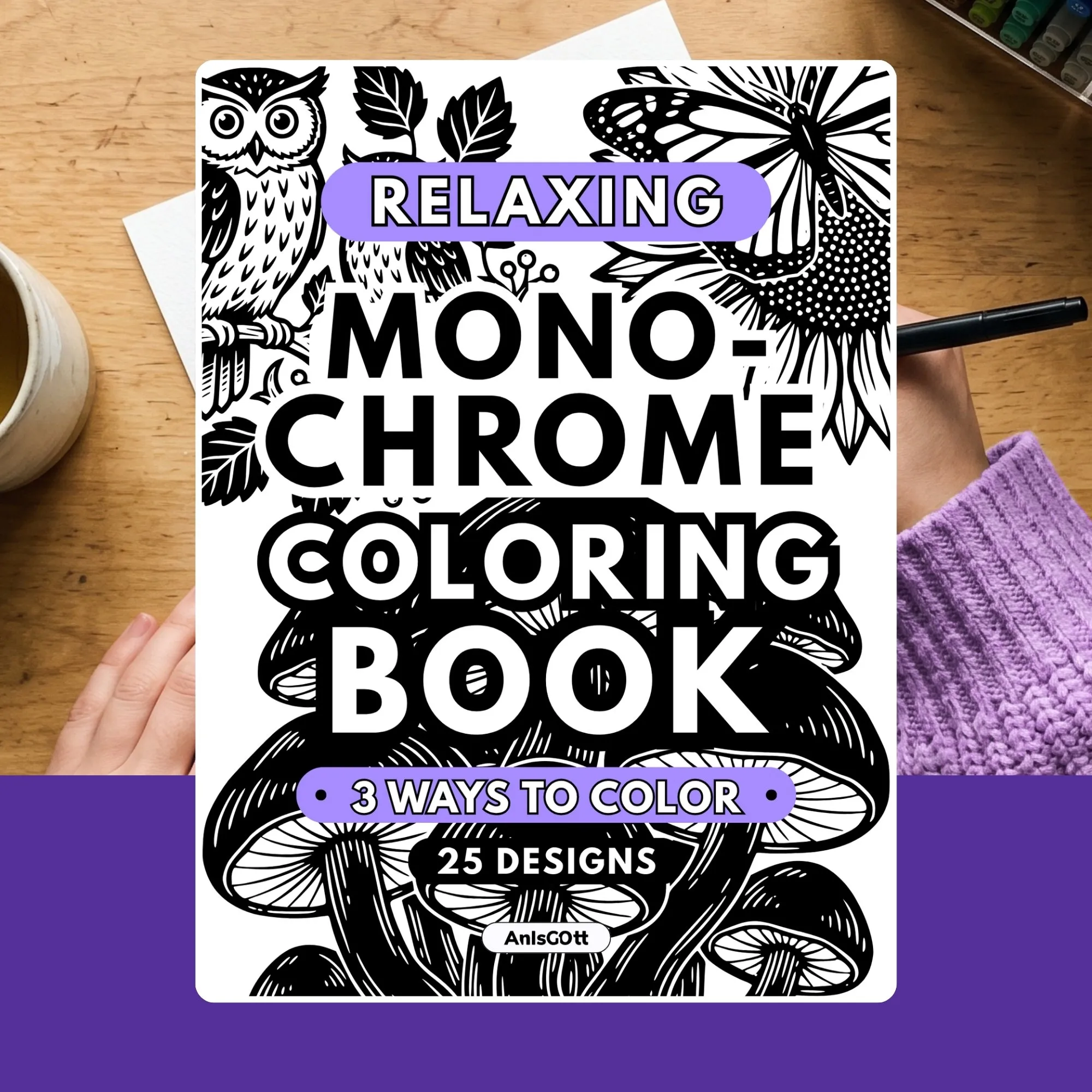
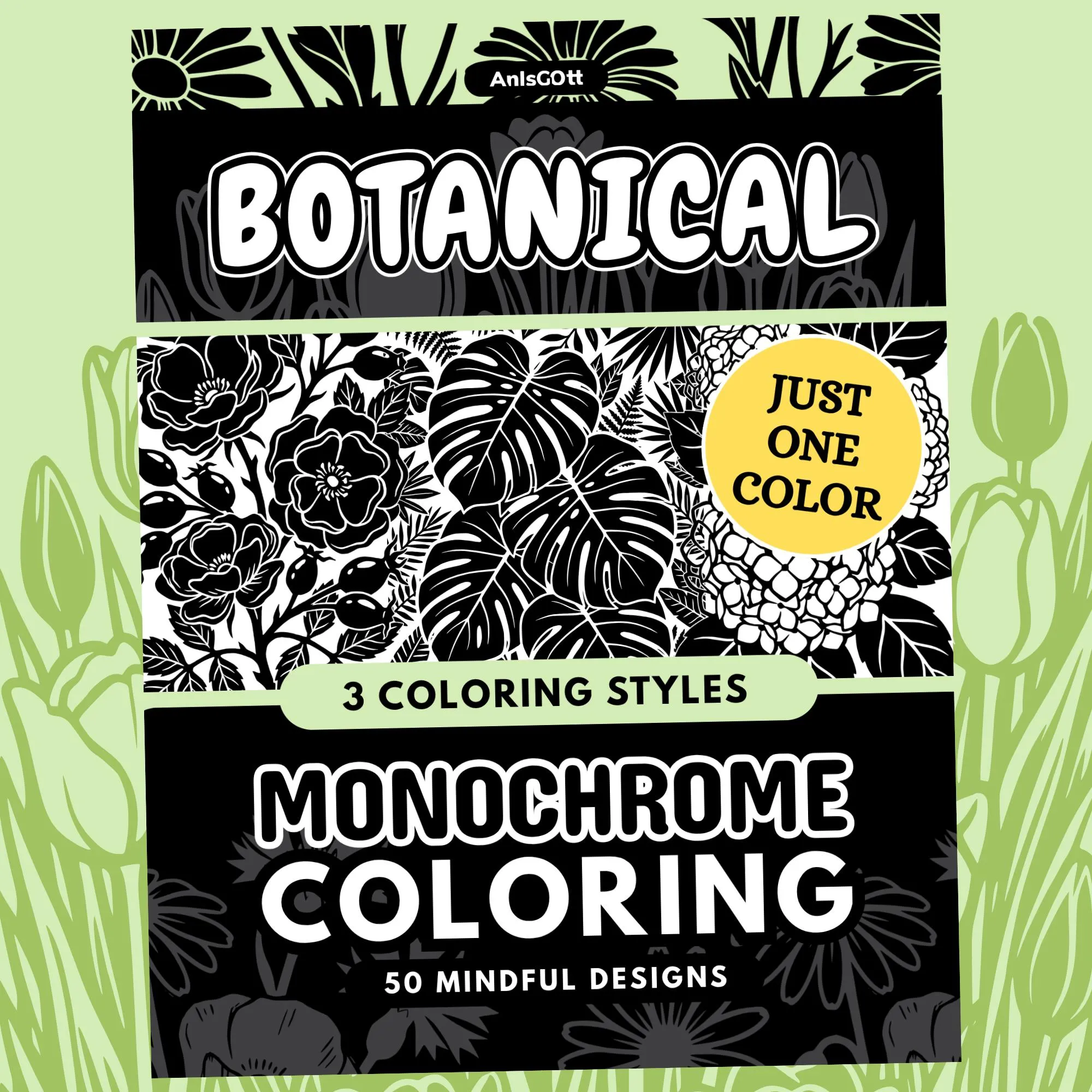
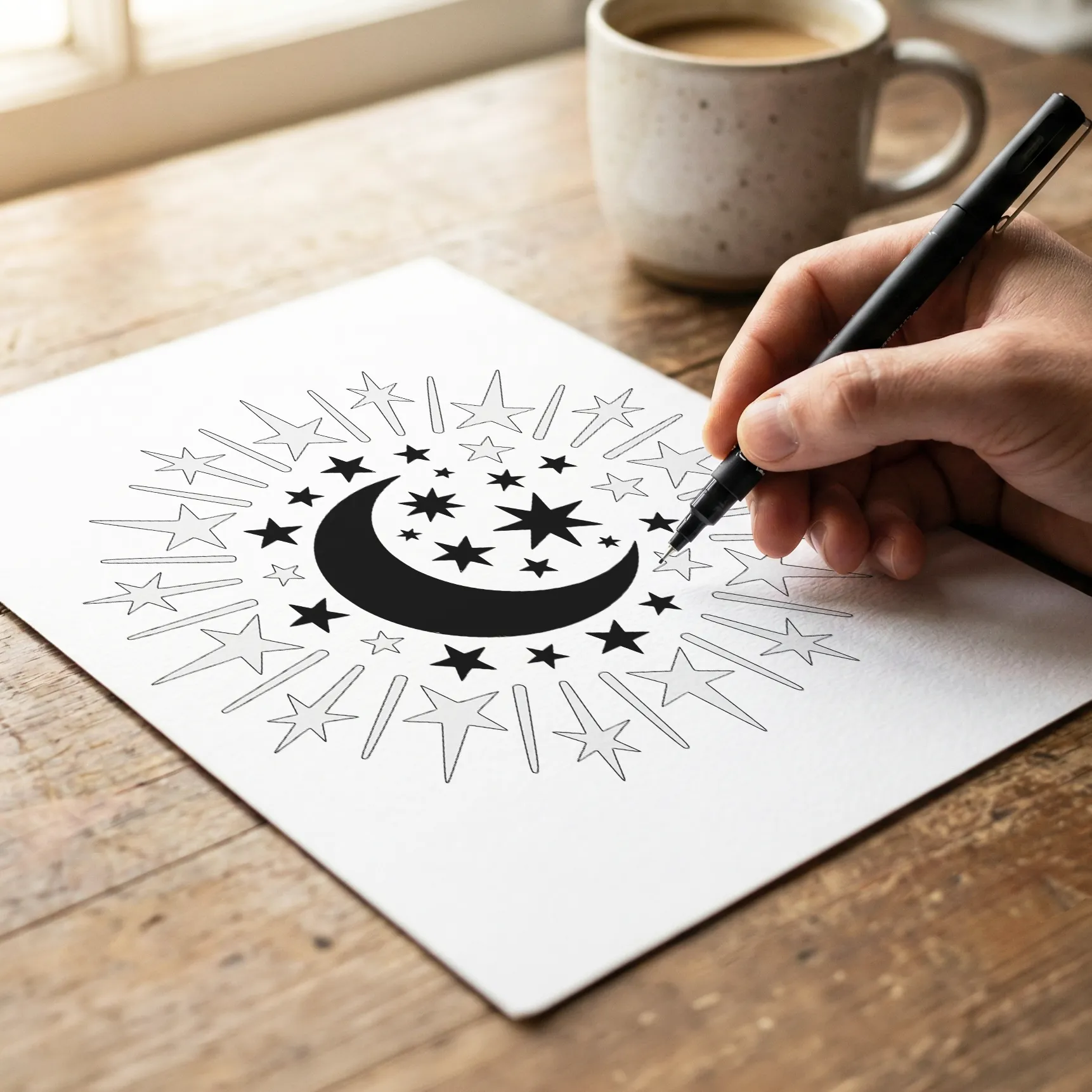
Relaxing Monochrome: bold graphic illustrations with large areas of solid black: roses, seahorses, mermaids, cacti. Woodcut-style. The heavy fills are satisfying and the subjects are varied enough to stay interesting.
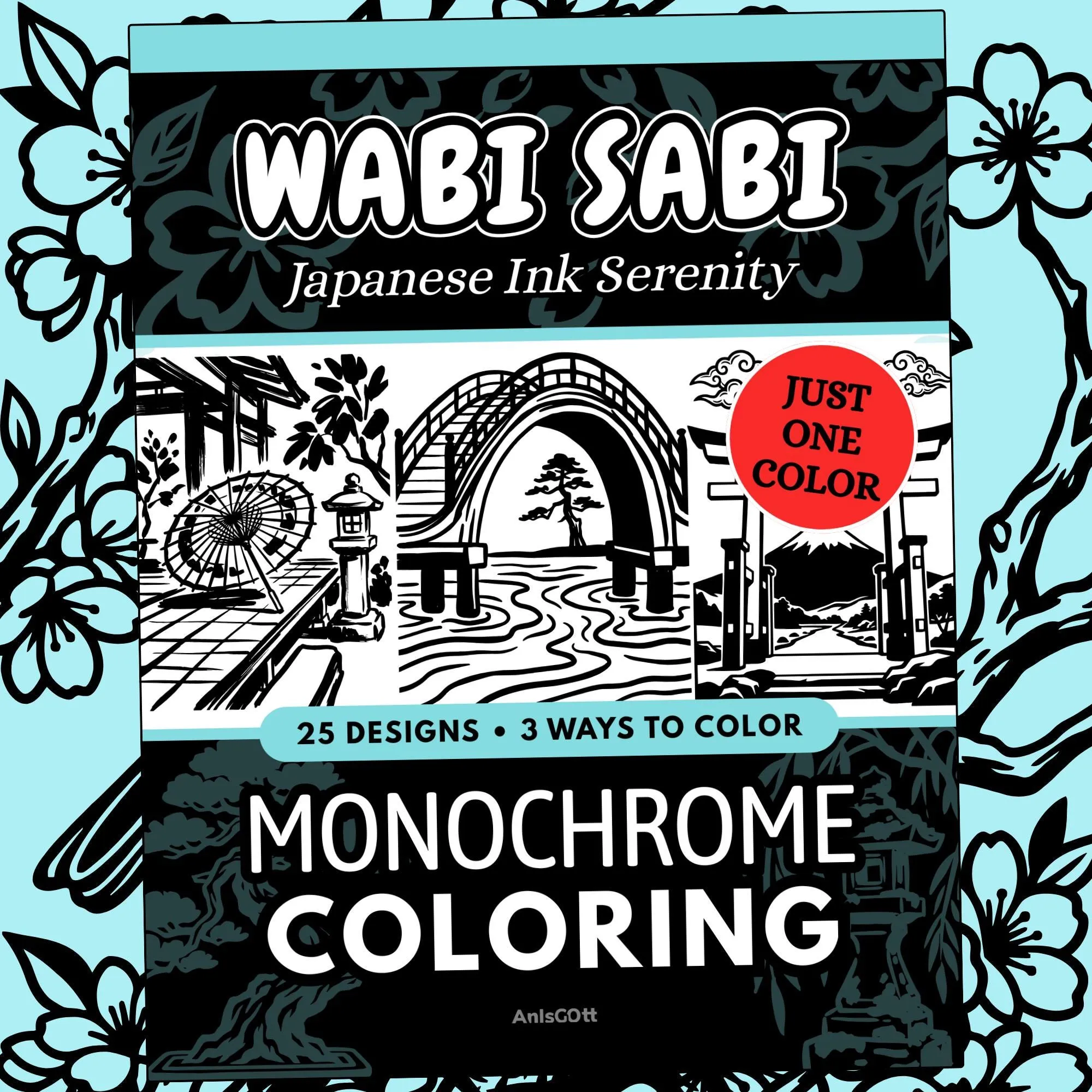
Wabi-Sabi: Japanese-inspired illustrations: cranes, koi, bonsai, geishas, sea turtles. Detailed enough to hold attention, grounded in a visual language that’s been associated with calm for centuries.
Frequently asked questions
How is this different from regular coloring? Regular coloring hands you a blank page and a box of choices. Monochrome coloring gives you one constraint, one color, and lets the structure do everything else. Less to decide means more room to actually rest.
Does it have to be in the evening? No. But decision fatigue accumulates across the day, so the window between late afternoon and bedtime tends to be when it hits hardest. That’s when the payoff is biggest.
What if I want to use two colors? Go for it, there are no rules here. What tends to happen with two colors is that your brain starts making micro-decisions again: which one here, do they look balanced, should I switch. If that doesn’t bother you, great. If you notice the mental chatter coming back, that’s when one color is worth trying.
How long before it actually works? Most people feel something shift within the first 10 to 15 minutes, roughly how long the brain needs to fully transition into a flow state. If 20 minutes is too long to start, try 10. The goal is to prove to your nervous system it’s worth doing, then you can build from there.
Can I do this digitally? Yes. All collections include PNG files optimized for Procreate, GoodNotes, and any drawing app. If you’re using an iPad as your wind-down device already, this integrates easily. Just pick one brush, one color, and go.