We’ve all been there.
You buy a gorgeous craft kit, genuinely excited. You sit down to start, and then the friction hits. The setup is complicated, the instructions look like a textbook, and the first five minutes feel more like work than play.
Before long, the initial spark fades. The kit lands on a shelf, joining the “graveyard of abandoned hobbies”, a quiet source of guilt you’d rather ignore.
For neurodivergent adults, the gap between wanting to do something and actually putting pen to paper can feel like a wall. That gap is less about willpower and more about how the brain handles transitions, and closing it takes a specific kind of setup.
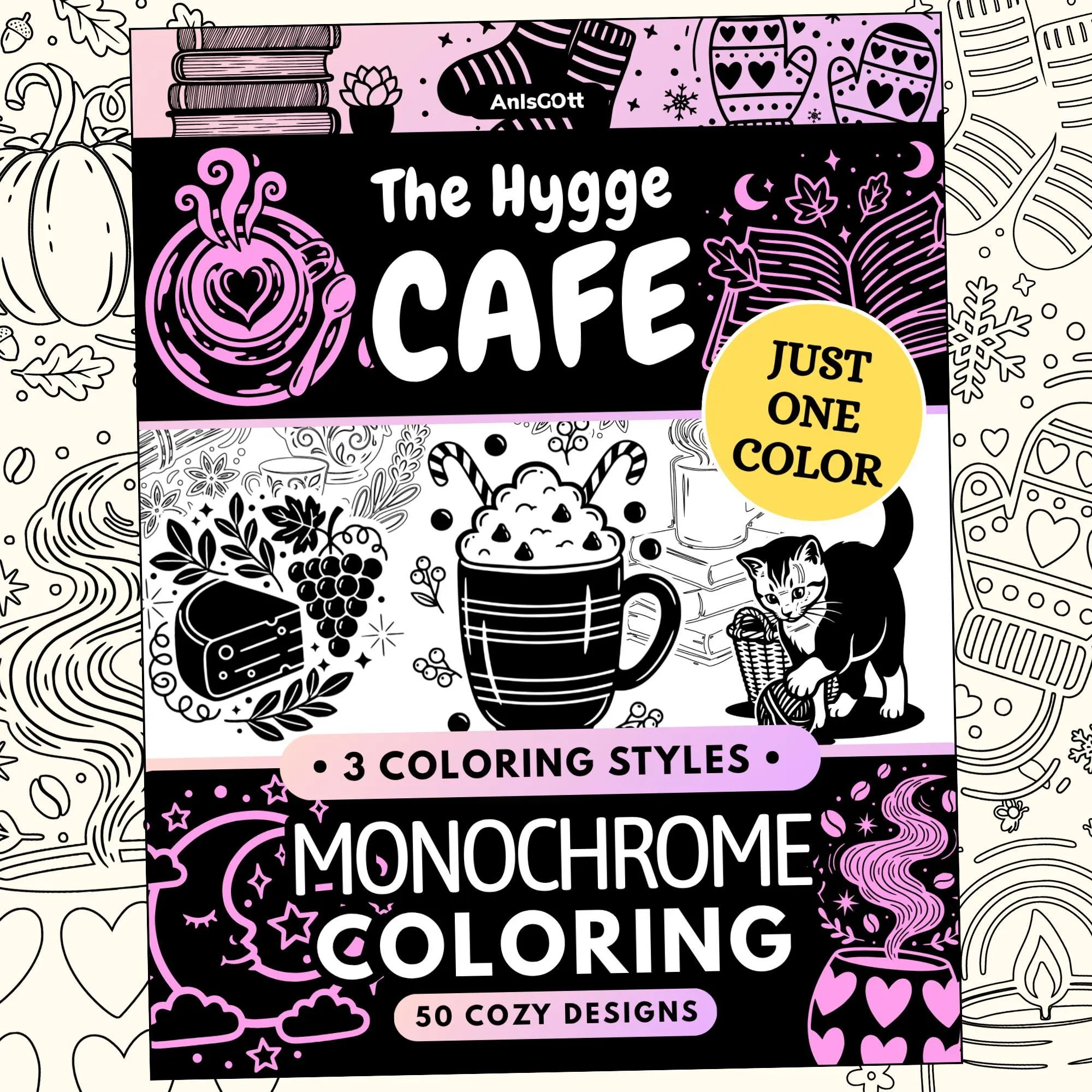
Monochrome coloring works for a simple reason: the single-color constraint removes a lot of the choices that usually derail focus.
Here is why the pattern clicks and how to use it to quiet the noise.
The ADHD brain and immediate feedback
Many ADHD adults notice that starting a new task requires an immediate, visible payoff.
- Most traditional crafts have a delayed reward. You practice guitar for months before it sounds like music, or learn complex stitches before a sweater takes shape. The barrier to entry stays high while the satisfying result sits far in the distance.
- Coloring offers an instant feedback loop. The first section you fill in looks complete right away. You get visible progress within thirty seconds, and because the line art is already laid out, you skip the intimidating blank-page phase.
Yet standard coloring books still run into a familiar hurdle.
When color choice becomes the hard part
Open-ended coloring pages, the kind that hand you dozens of markers and a blank canvas with no guide, can turn into a wave of small decisions:
- Which shade of blue works for the sky?
- Does this lavender clash with that terracotta?
- Should I start with the background or the main figure?
- What if I choose the wrong color and ruin the page?
This constant decision overhead becomes exhausting. Often, the inner commentary gets loud enough that the page is abandoned midway, adding to that familiar hobby guilt.
Guided formats sidestep that overhead in different ways. Mosaic coloring and paint-by-number remove the guesswork by showing exactly where each color goes. Monochrome removes it differently: you pick one marker before you sit down, and that’s the only decision you need to make. From there, you just follow the linework and let the page fill.
Why monochrome works for ADHD
- Just one decision. With one pen and one color, there’s nothing to coordinate, match, or second-guess.
- Immediate micro-wins. Every shape you fill registers as finished, giving you a calm, steady sense of progress.
- Low-stakes mistakes. Using a single color means there are no wrong color choices. Even a slight slip outside the line blends naturally into the monochromatic look.
- Easy stopping points. You don’t need a multi-hour block of time. The modular designs let you color for five minutes, set the page down, and return tomorrow without losing momentum.
Download 15 free sample pages to see which style feels easiest for your hands today.
Three ways to color (and the ADHD standout)
Every design in our monochrome collections comes in three versions, letting you match your current energy:
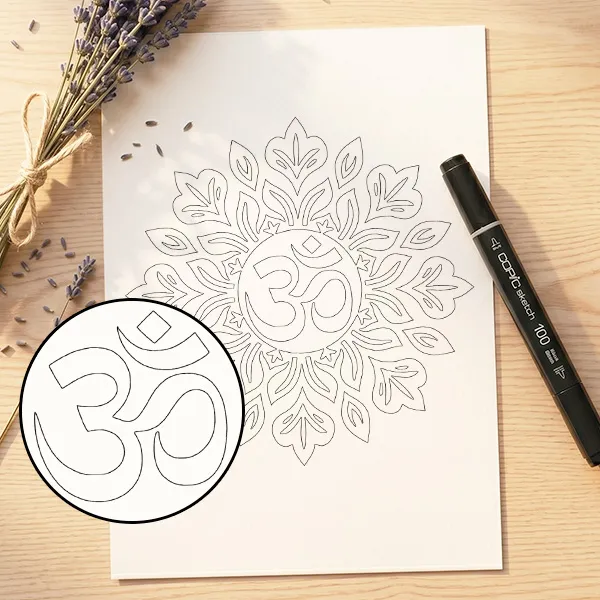
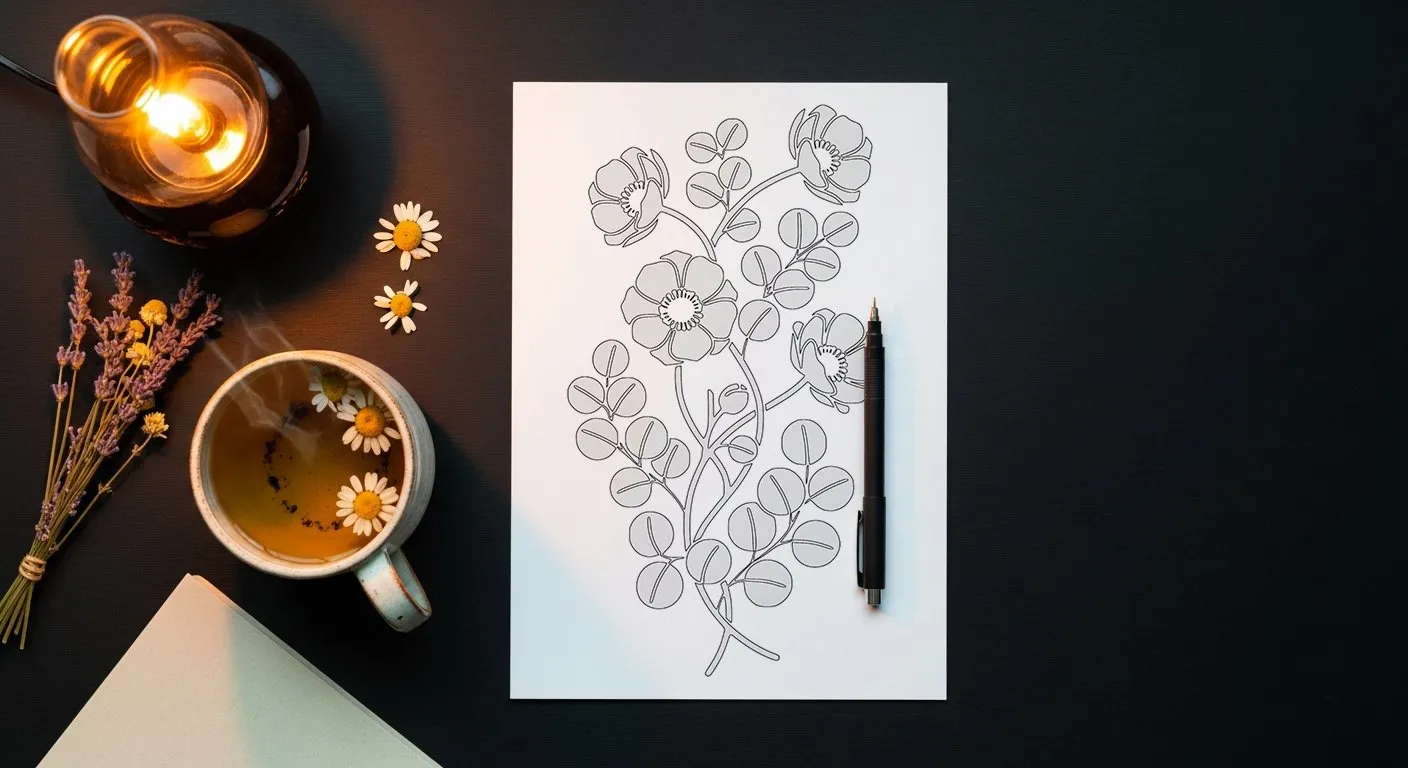
- Classic Outline: Traditional clean linework for complete freedom to shade, cross-hatch, or color your way.
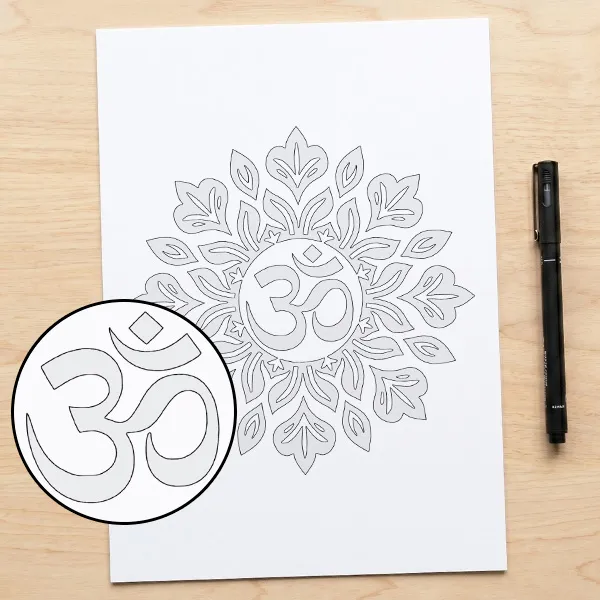
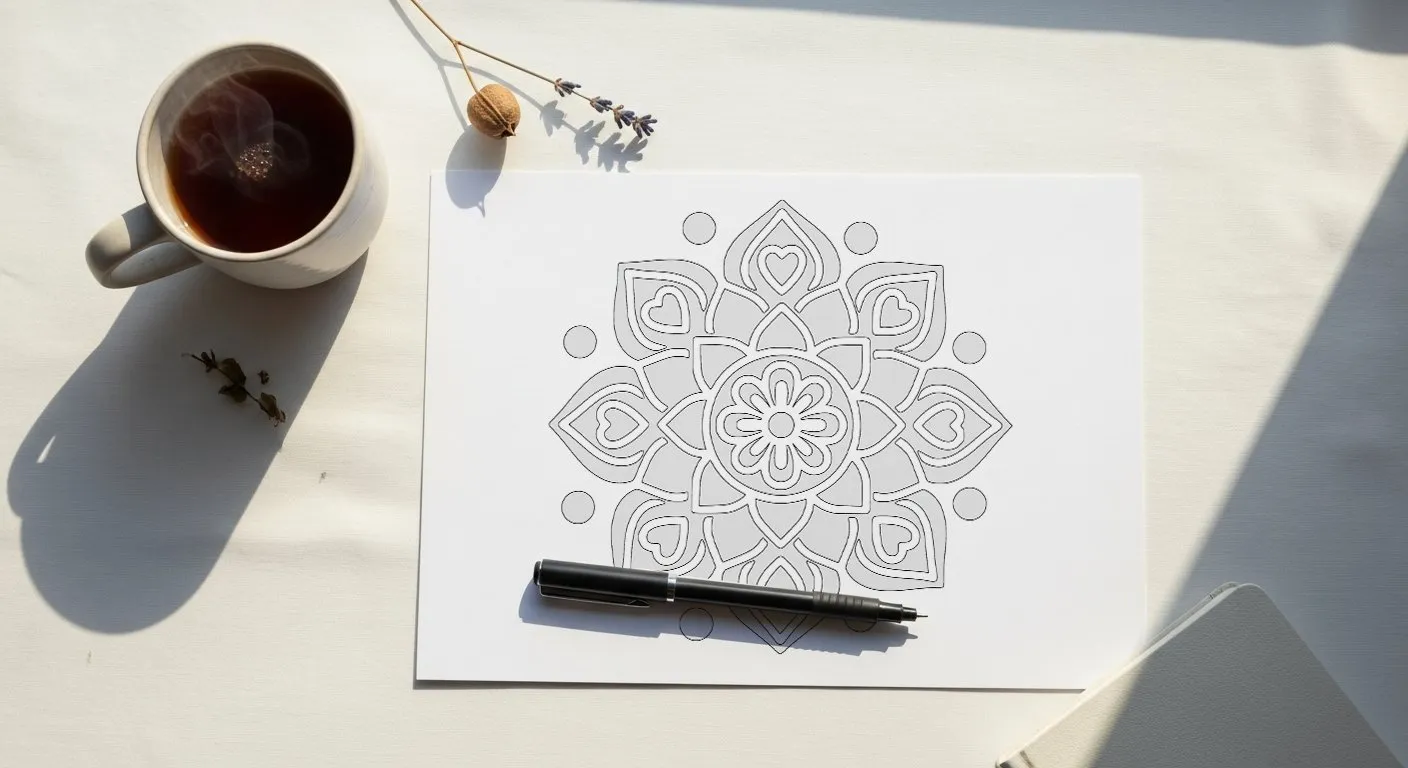
- Shadow Guide: Soft gray tones printed directly onto the page show exactly where depth belongs. Just color straight over the gray, no guessing where to color.
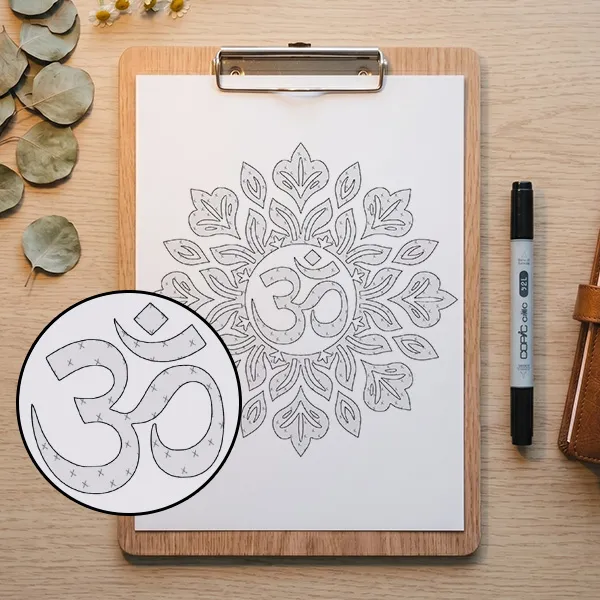
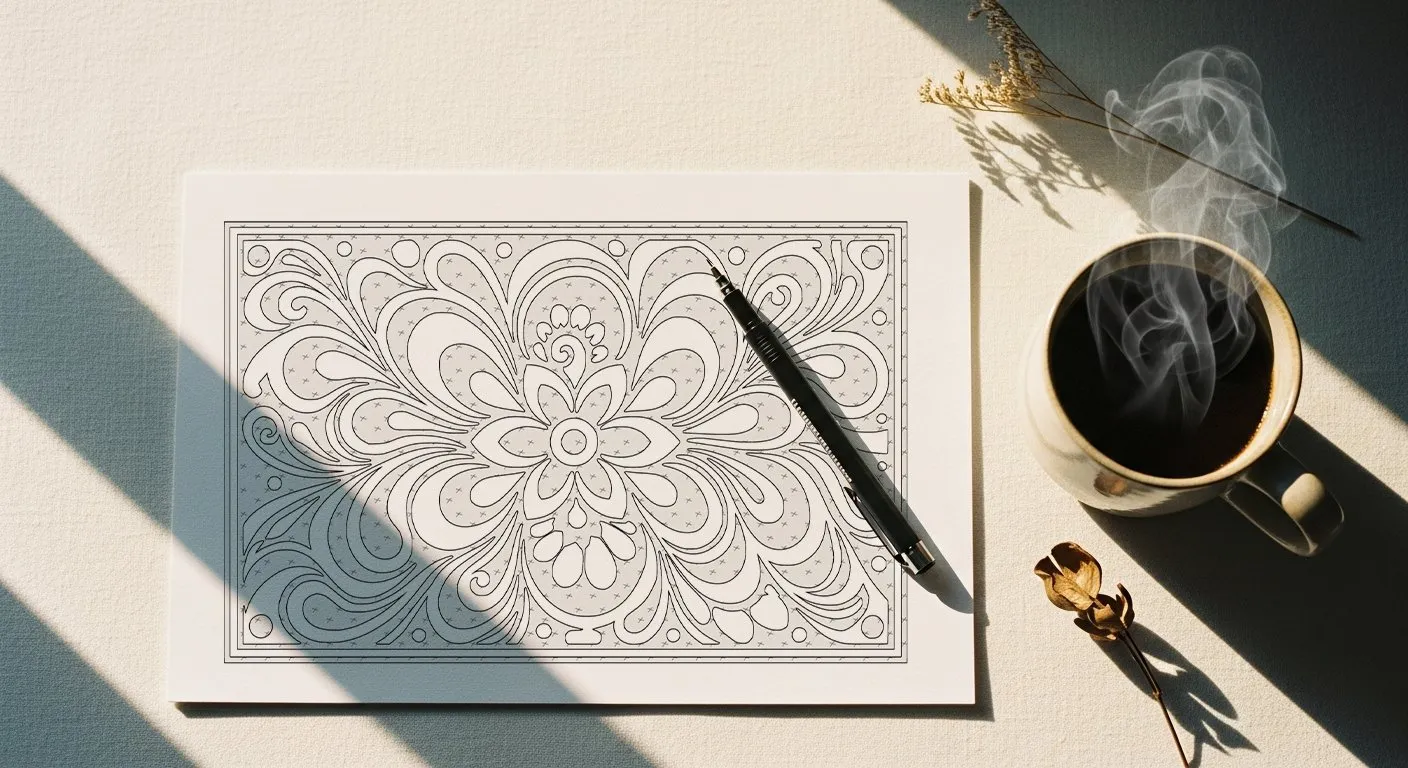
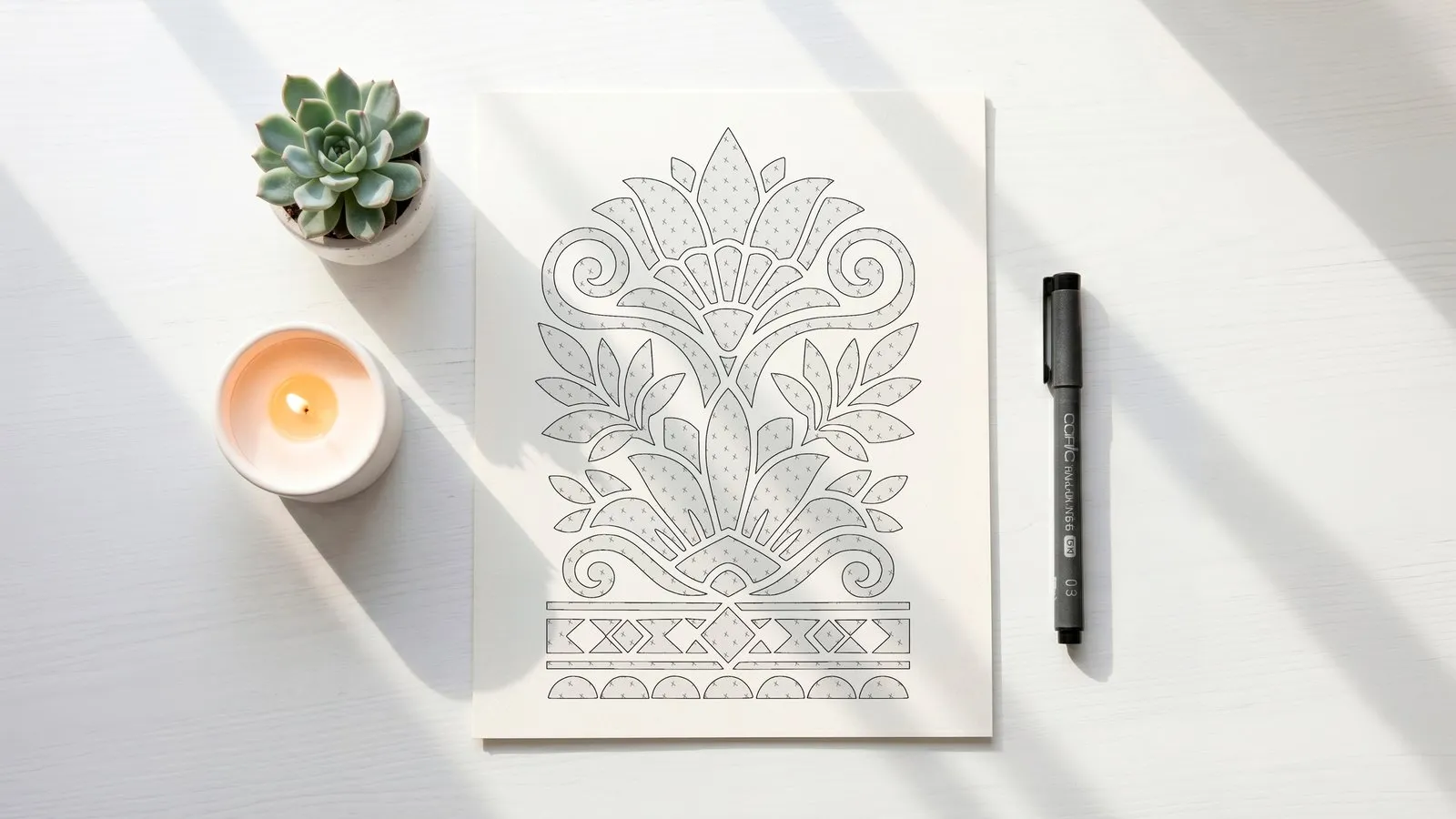
- Pattern Guide (The ADHD standout): Subtle marks indicate which sections to fill and which to leave open. Your hand moves automatically from section to section. The page handles the decisions while you enjoy the tactile feeling of ink filling paper. Using a dark marker covers the marks completely.
Building a screen-free wind-down
- Keep the transition under 10 seconds. Store a favorite marker inside your coloring book on your bedside table or clipboard. If you have to search a drawer for a pen, your brain will default to picking up your phone.
- Create a double anchor. Absolute quiet can leave room for internal thoughts to race. Pair your session with a low-focus sound like a podcast, lo-fi beats, rain audio, or an audiobook. The audio occupies your verbal thoughts while your hands stay busy in the pattern.
- Drop the completion goal. The focus is time spent in the practice, not a finished art piece. Coloring three small sections today makes for a successful session.
Where to start
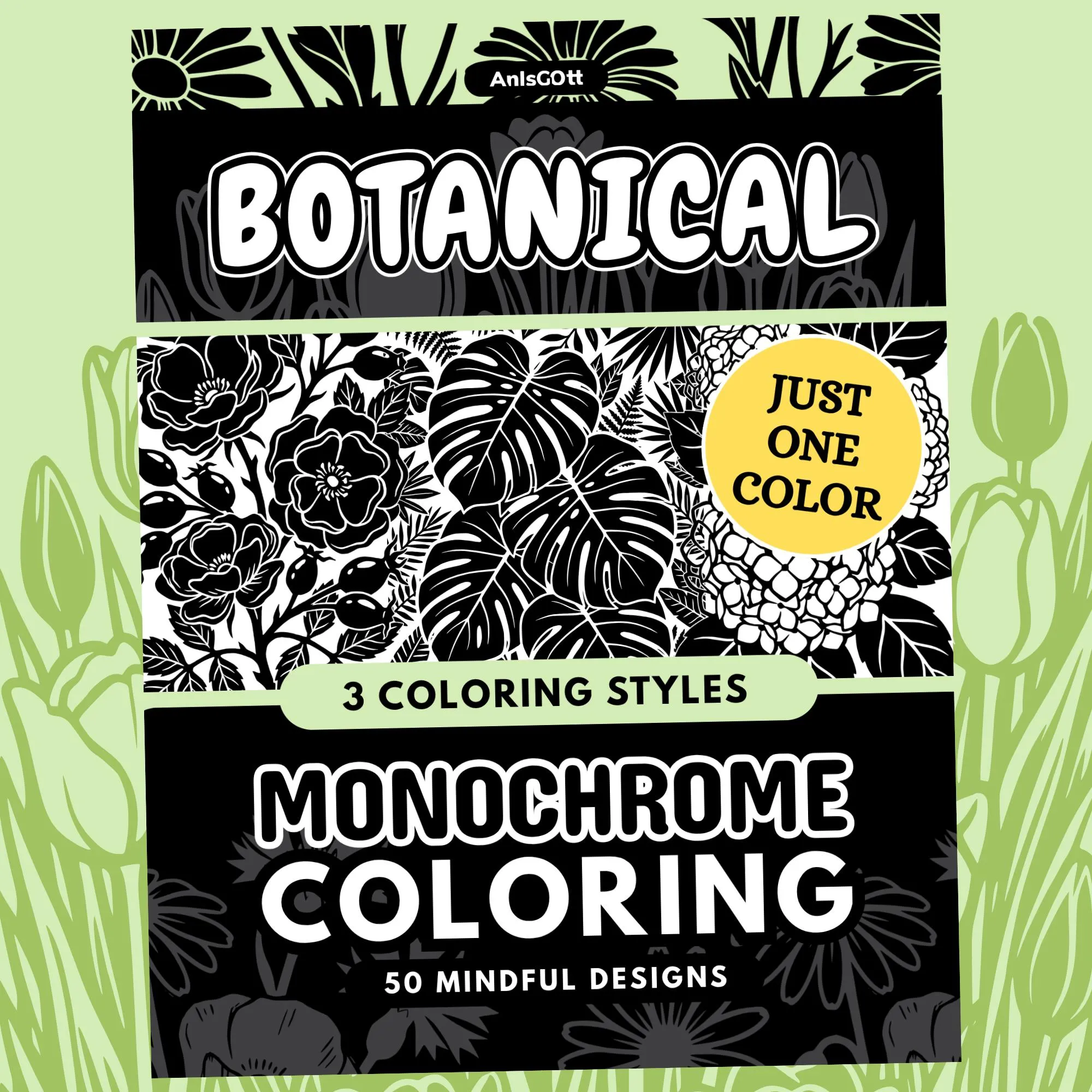
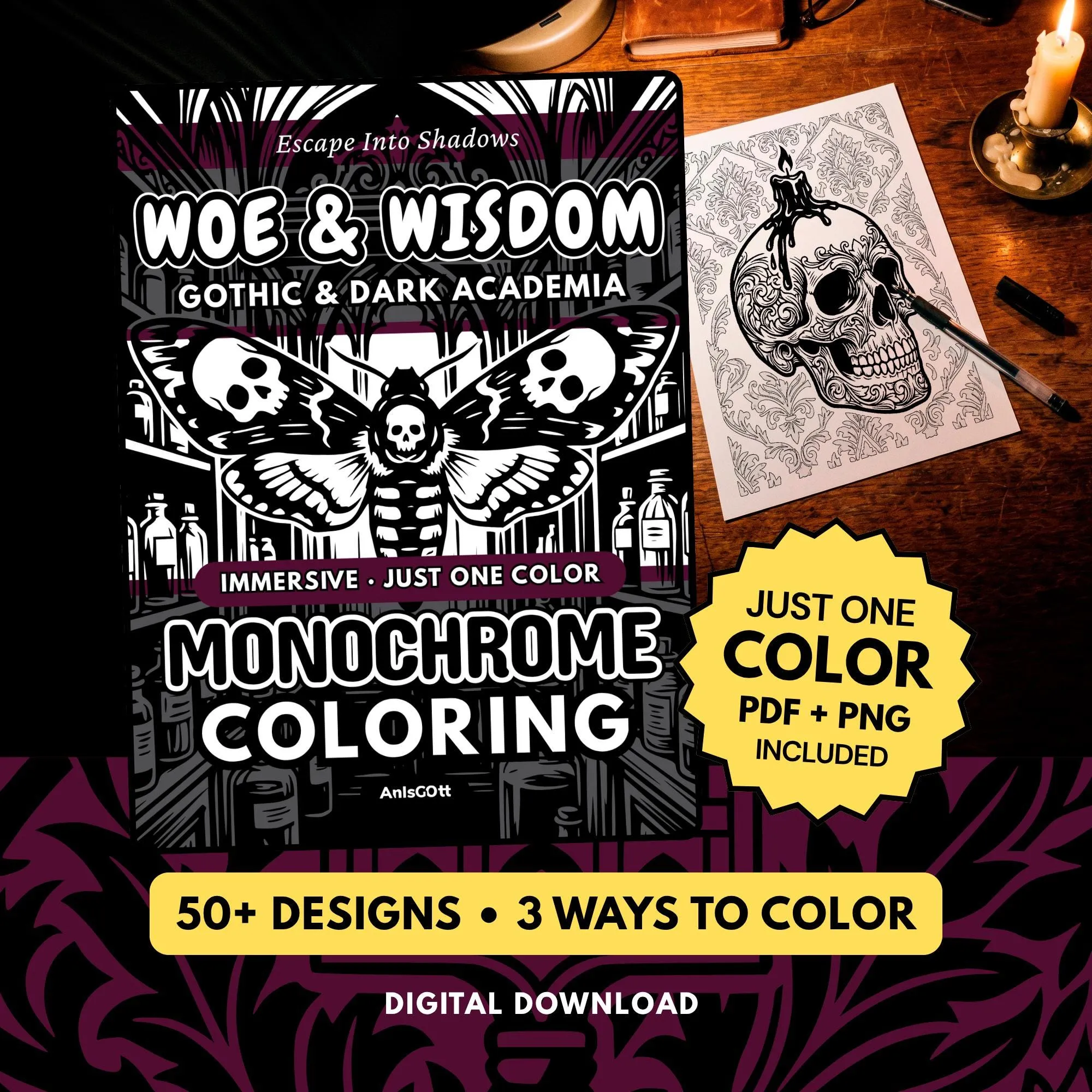
If you’d like to test the process, start with our free starter pack or explore these popular collections:
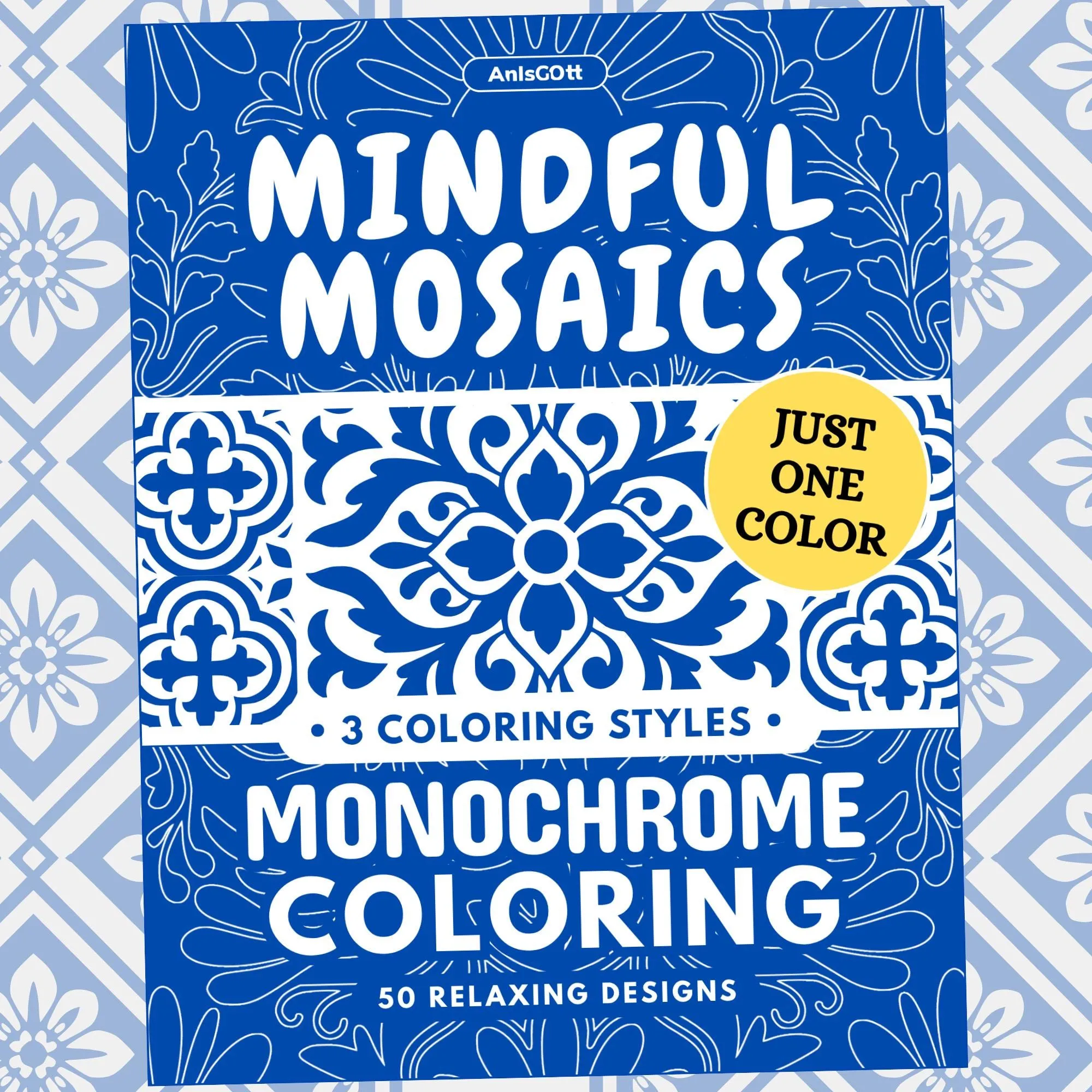
- Mindful Mosaics: Symmetrical geometric patterns inspired by Art Deco and classic tilework. The repeating rhythm helps your hand fall into an automatic flow.
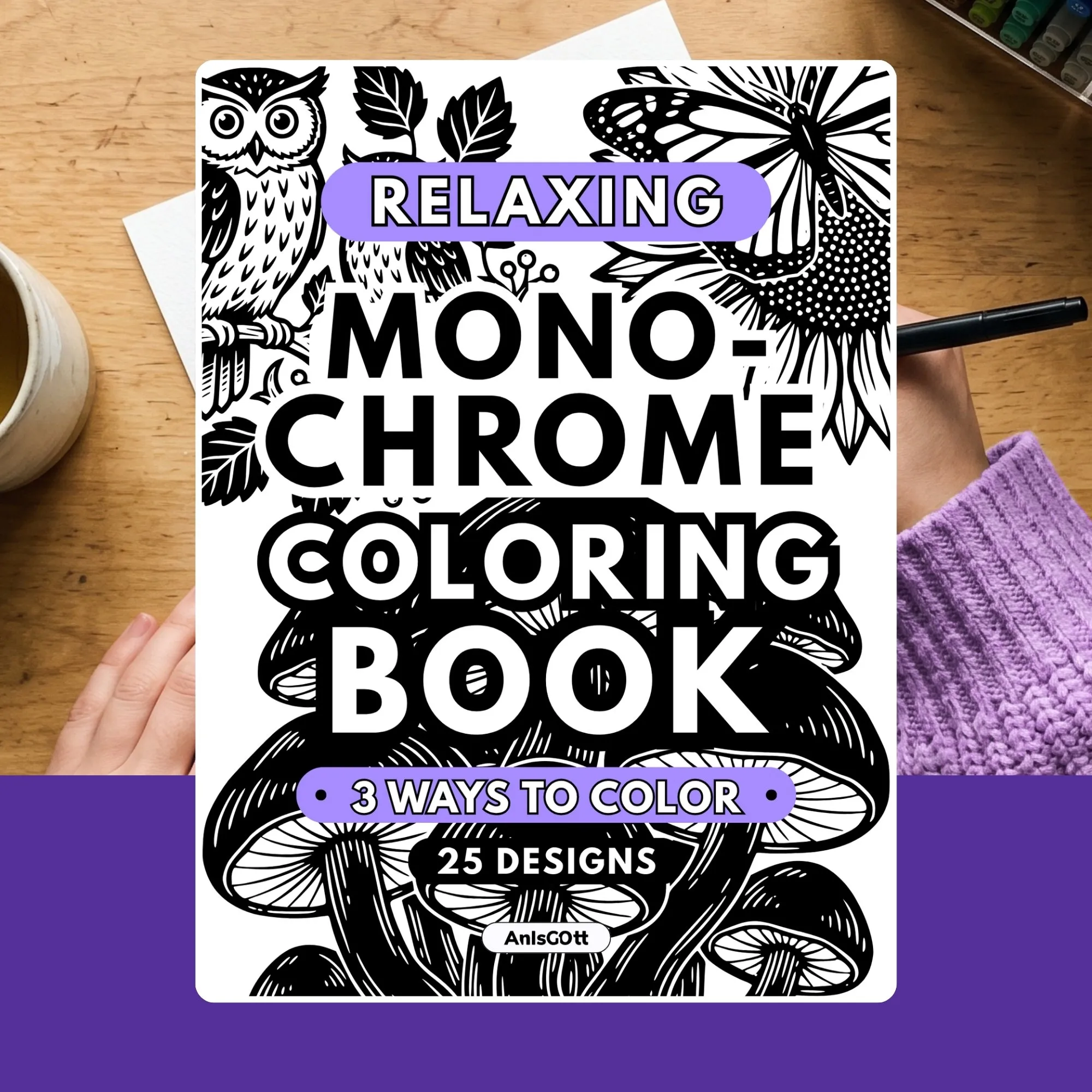
- Relaxing Monochrome: Bold graphic illustrations with wide fill areas. If intricate details feel frustrating, these larger shapes offer quick, satisfying wins.
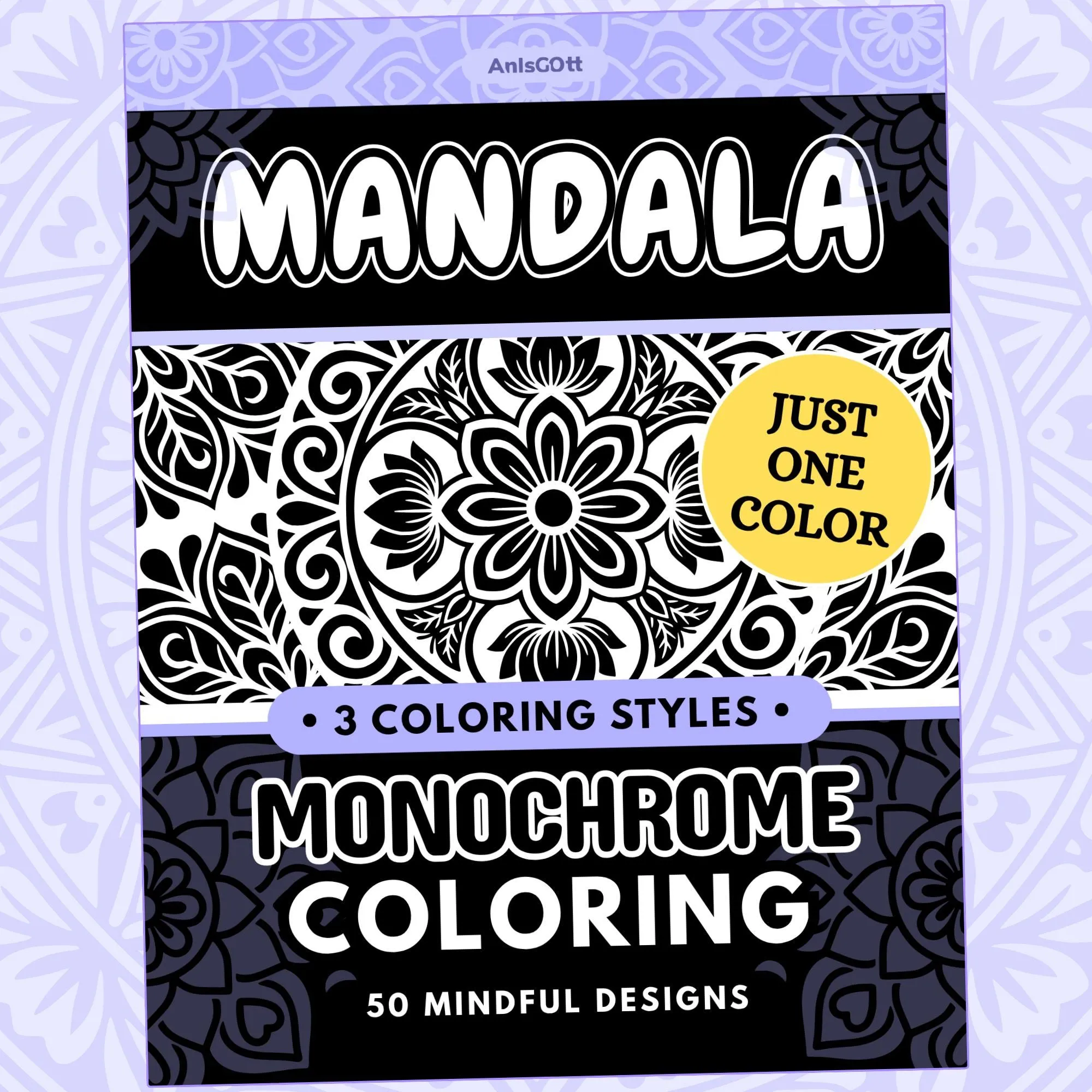
- Mandala Monochrome: Circular symmetry that draws the eye inward, helping quiet a hyperactive mind.
Frequently asked questions
What if I get bored after one page?
That’s completely normal. ADHD brains crave novelty, so when a page feels stale, just grab a different theme, no need to plan ahead or pick “the right one.”
What if I abandon a page half-colored?
That’s completely fine. A half-colored page won’t degrade or judge you. It sits quietly on your clipboard until you’re ready to pick it up again, whether that’s tomorrow or next month.
Is digital coloring on an iPad just as good?
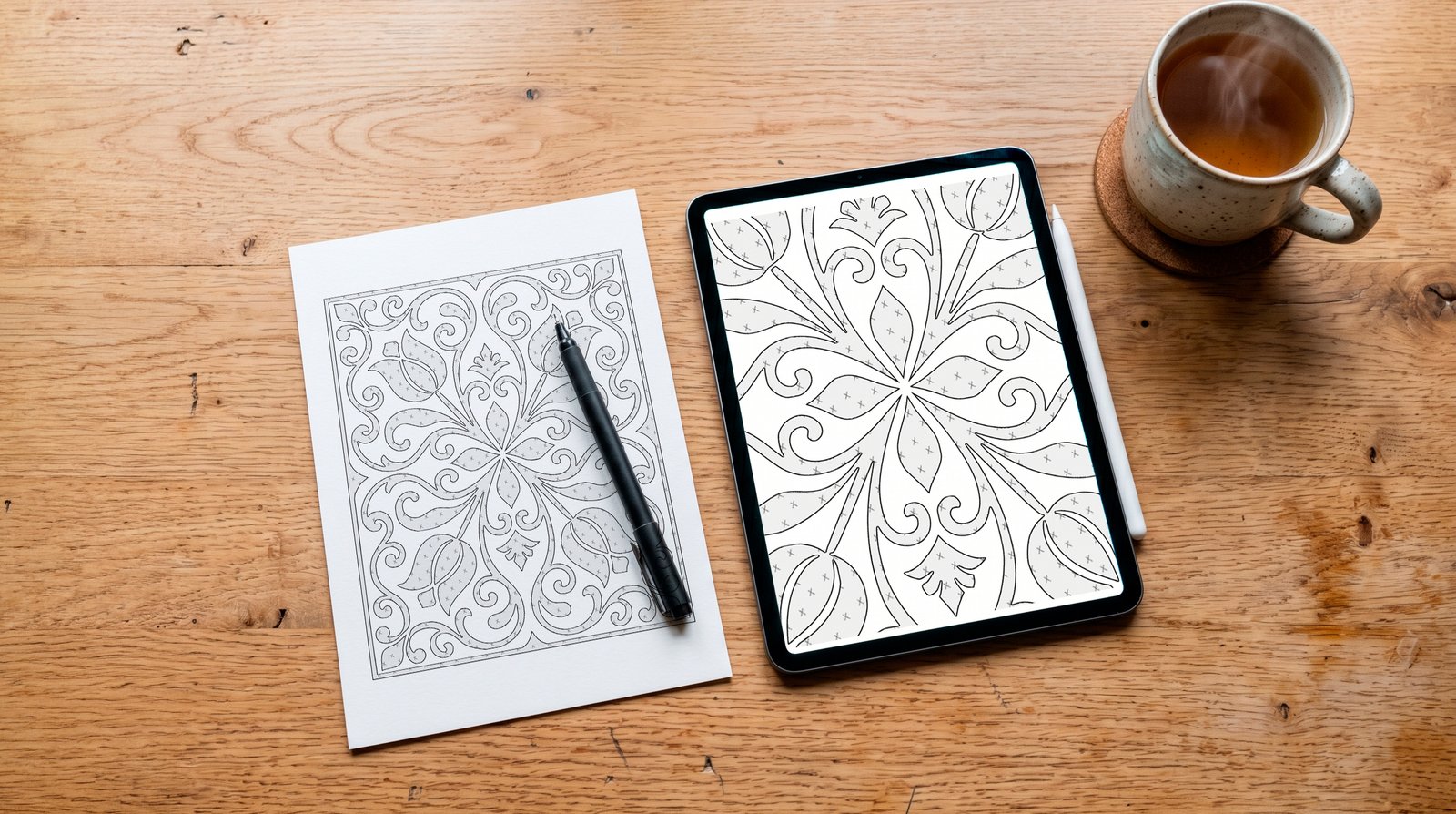
Yes. Every download includes high-res PNG files designed for Procreate or GoodNotes. The iPad gives you an instant undo option if a line slips. If you color before bed, lower your screen brightness and turn on Night Shift.
Grab your 15 free pages here, light a warm lamp, and let your mind take a real break.