Staring at the ceiling? Reading the news? Running through the endless checklist of everything you didn’t finish today?
We’ve all heard the advice: “Put your phone down before bed.”
But that advice usually fails because it tells you what to remove without giving you anything to replace it with. Your brain at 10 PM is running on momentum and needs a place to land. Without a structured, low-stakes alternative, it will default to the easiest stimulant available: a bright screen.
This is about what to replace it with: why monochrome coloring works so well as a low-friction off-switch for a busy mind.
The science: what blue light actually does (and warm light heals)
When your eyes absorb blue light (the short-wavelength light from phones, tablets, and bright overhead LEDs), your brain suppresses melatonin, the hormone that signals your body it’s time to rest.
- The delay: Blue light in the evening is linked to delayed melatonin release, which can make it harder to fall asleep at your usual time.
- The debt: Poor evening light habits are also linked to lower total sleep time and less deep, restorative sleep.
- The solution: Your brain reads warm light (candles, lamps, incandescent bulbs) as “sunset.” It tells your nervous system that the day is ending, allowing your natural melatonin production to kick in right on time.
When your brain has nothing left to give
Journaling, reading, meditation, and audiobooks all work well for plenty of people, especially with practice. Some nights, though, your brain doesn’t have the words, the focus, or the patience for any of them. That’s when it helps to have something simpler on hand: an activity that’s active enough to hold your attention, simple enough to ask for almost no decisions, and fully analog.
The monochrome magic: why coloring quietly resets your mind
When you sit down with a single marker and a monochrome page, a physiological shift occurs within minutes:
- Tactile & repetitive calm: The physical, rhythmic motion of coloring back and forth is often described as calming, similar to other repetitive activities like knitting or rocking. It acts like a somatic anchor.
- Slowing your gaze: Focusing on repetitive, structured line work is the kind of visual task described in Attention Restoration Theory, a well-established framework for how the brain recovers from mental fatigue. It naturally slows down your eye movements, breaking the frantic “scan-and-swipe” pattern of scrolling.
- One decision, no pressure: Traditional adult coloring books hand you 60 colored pencils, which means constant micro-decisions: which shade of blue, whether the colors match, whether you’re doing it right. The American Medical Association describes this kind of decision fatigue as a real drain on mental energy, and every color choice adds to it.
- The monochrome difference: You choose one color before you sit down. That is the last decision you make. After that, you simply color, with no wrong color to second-guess.
The nightstand ritual: your 20-minute wind-down
Create a sacred, low-friction routine on your nightstand to transition from a long day into deep rest:
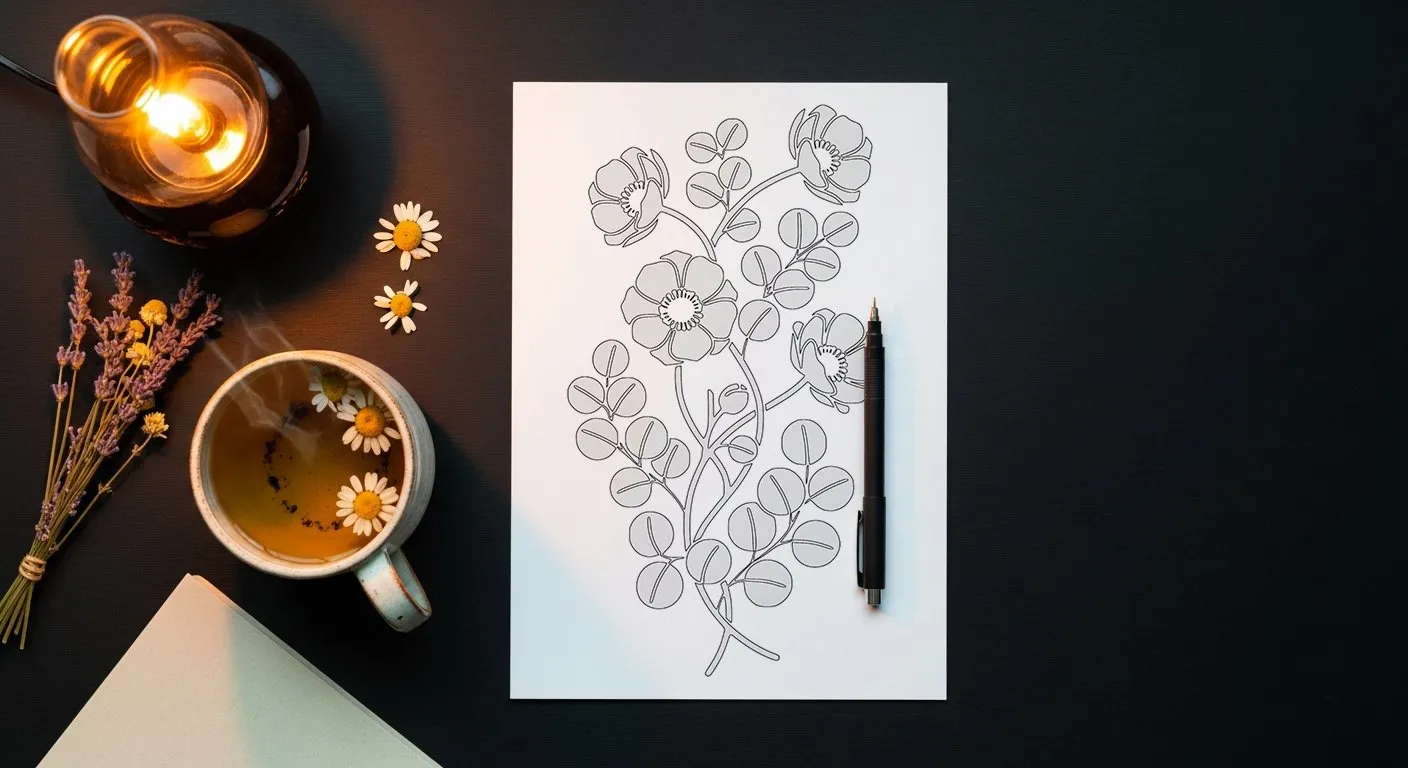
- 8:55 PM | Dim the lights: Turn off overhead lights and turn on a warm bedside lamp. Pour a warm, caffeine-free tea and place your phone face-down or in another room.
- 9:00 PM | Start your flow: Sit down with one page and your pre-selected pen. You don’t have to finish the page; the goal is time spent in the flow, not completion.
- 9:20 PM | Set your page aside: Stop where you are. Wash your face, brush your teeth, and slip under the covers. Your mind is now quiet and ready to drift off.
Nightstand hack (keep it clean): Standard office paper is thin. To avoid marker ink bleeding through and staining your nightstand or sheets beneath, simply slide a scrap page or a piece of thin cardstock behind your coloring page before you start. It costs nothing and saves your furniture.
Best collections for sleep & relaxation
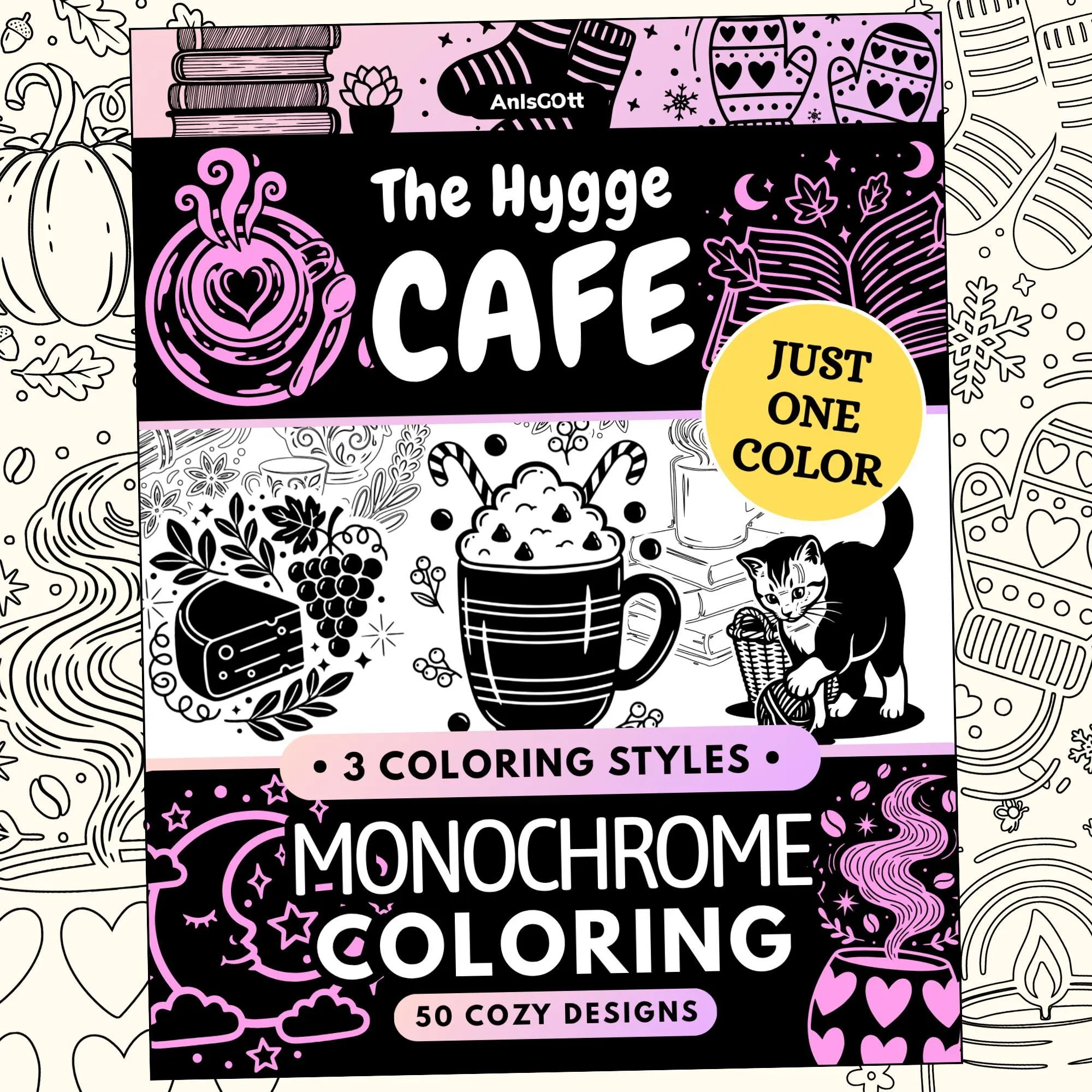
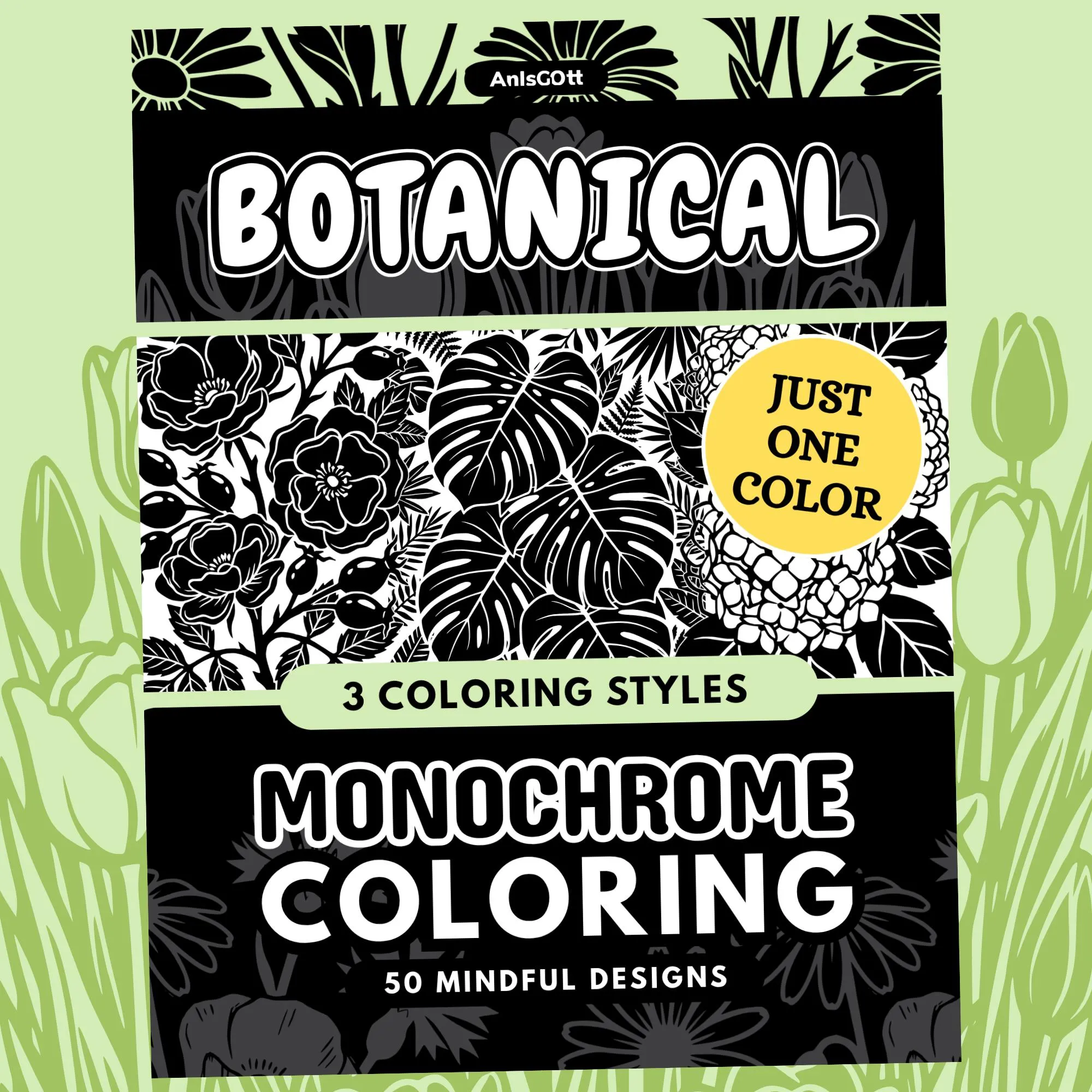
If you want to establish an evening ritual, some aesthetics are naturally more soothing to the eyes. Here are the three most relaxing monochrome books to explore:
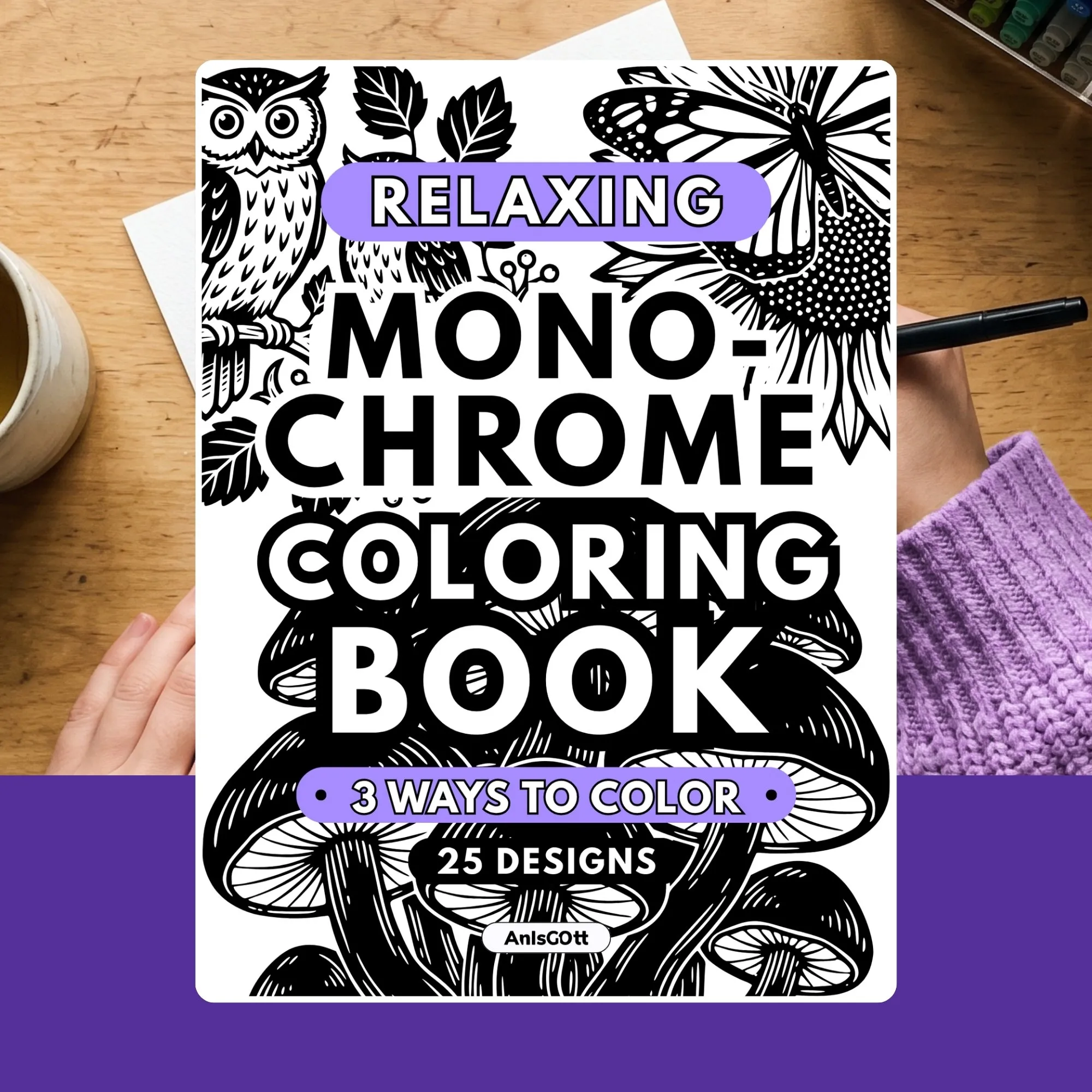
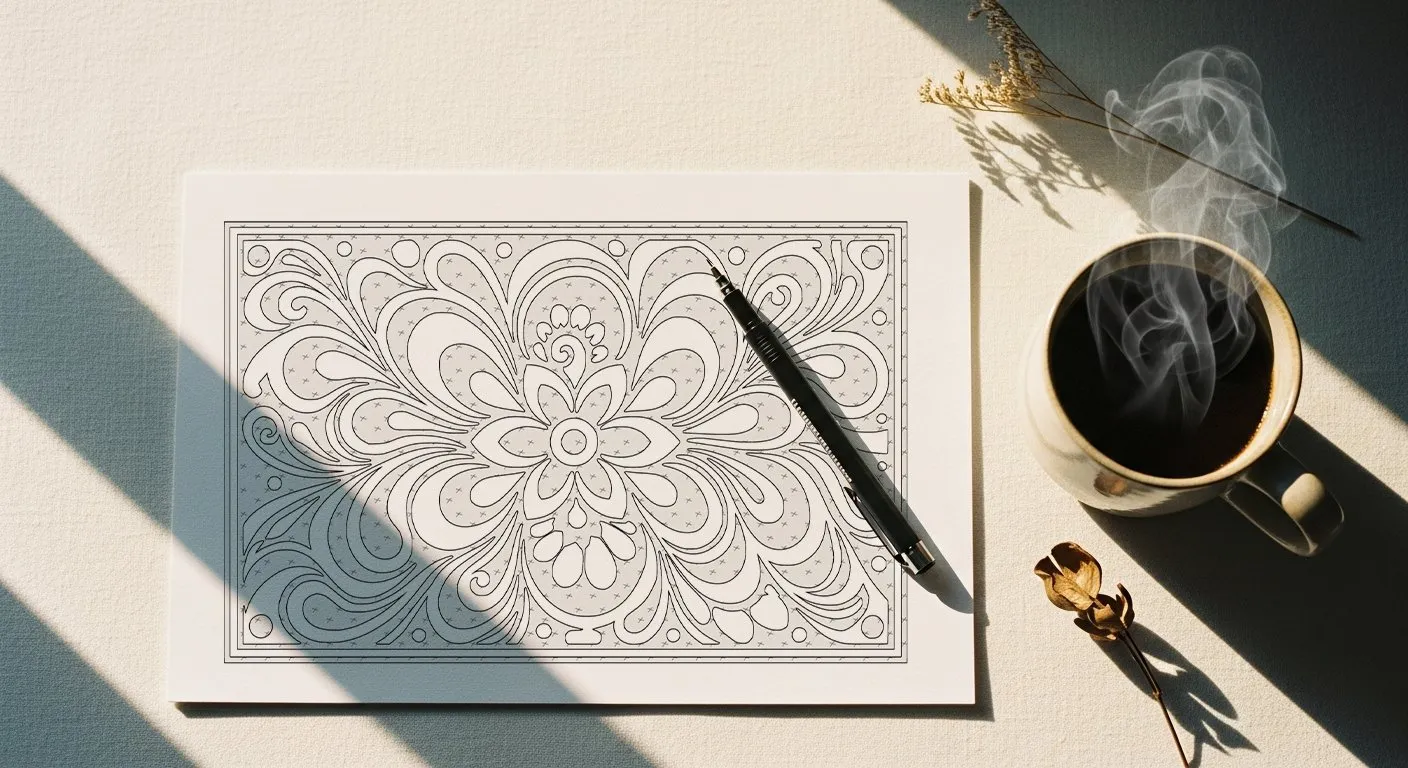
- Botanical Monochrome: Gentle, organic illustrations of ferns, wildflowers, and forest foliage. The soft curves of nature are incredibly restful to color under warm lamplight.
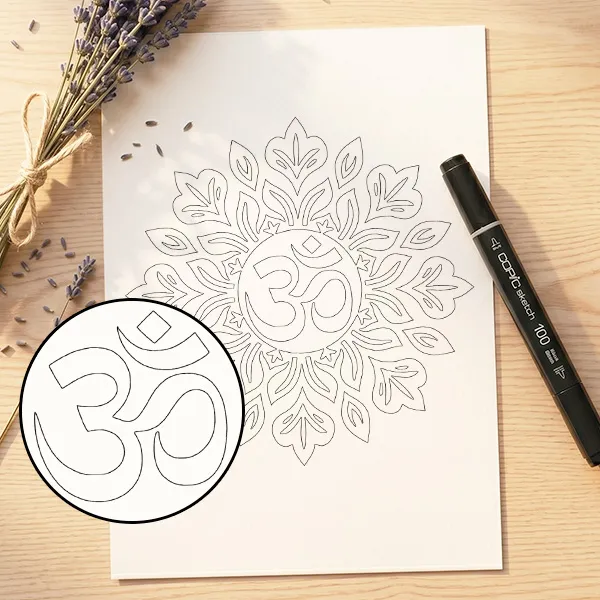
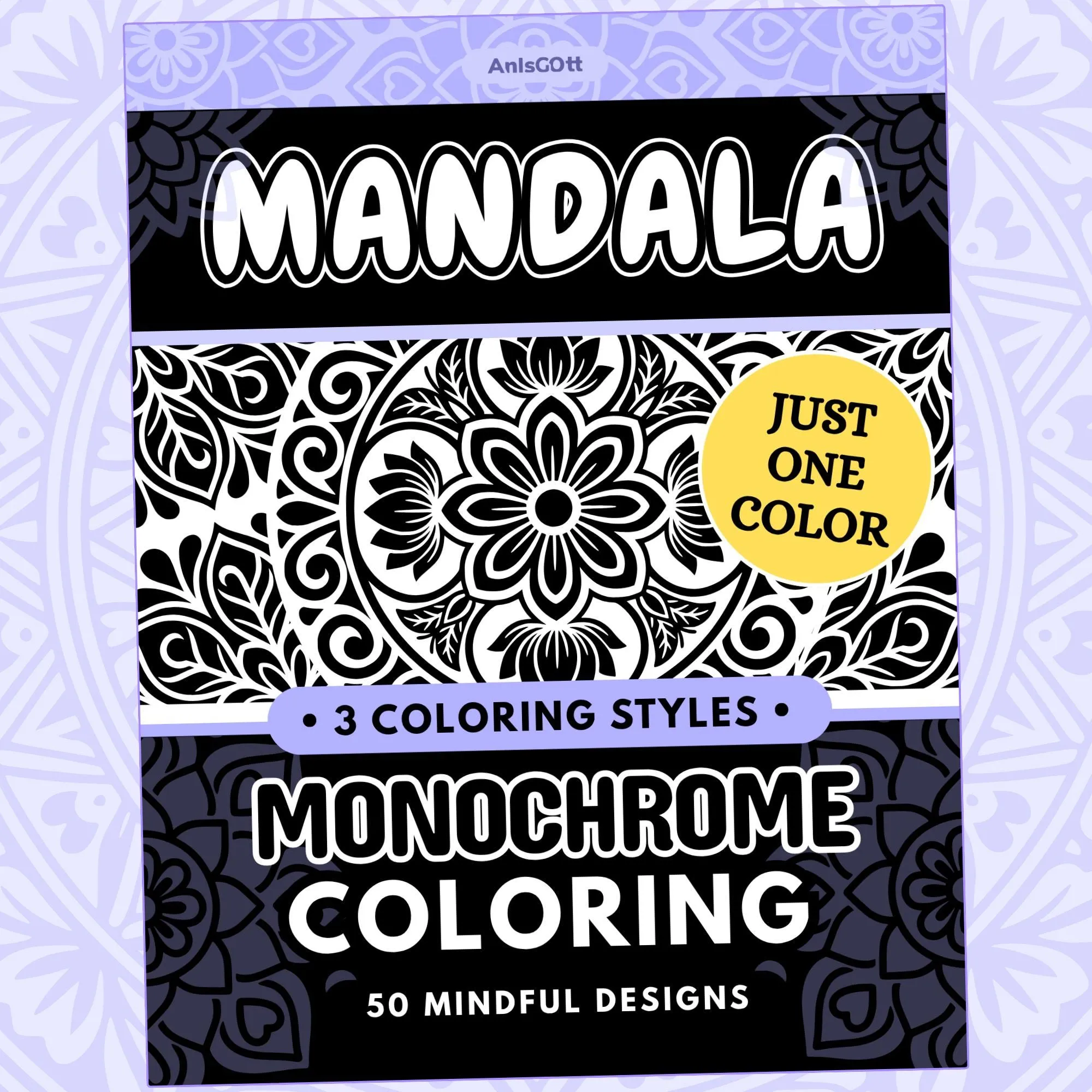
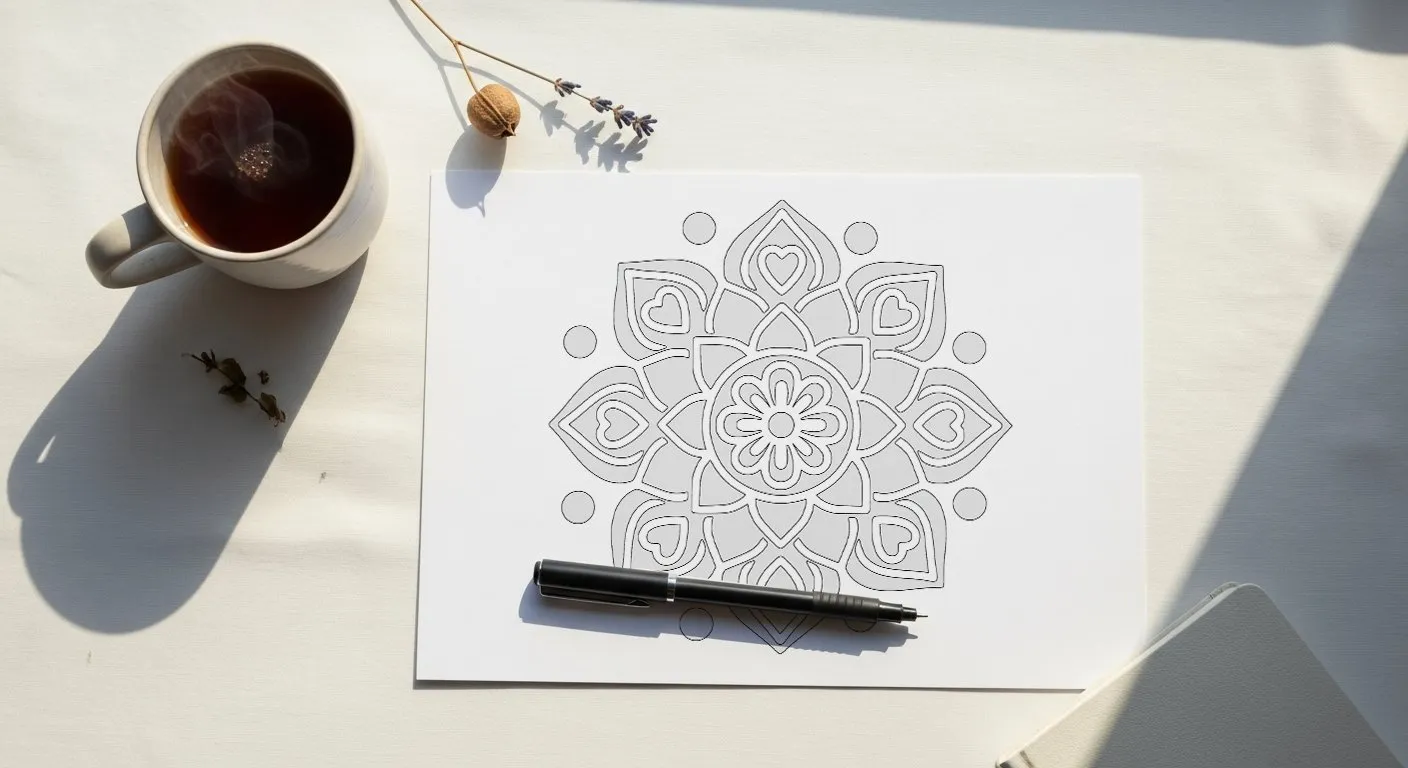
- Mandala Monochrome: Radial symmetry acts as a visual anchor. Because the pattern is highly organized, your hand falls into autopilot mode quickly.
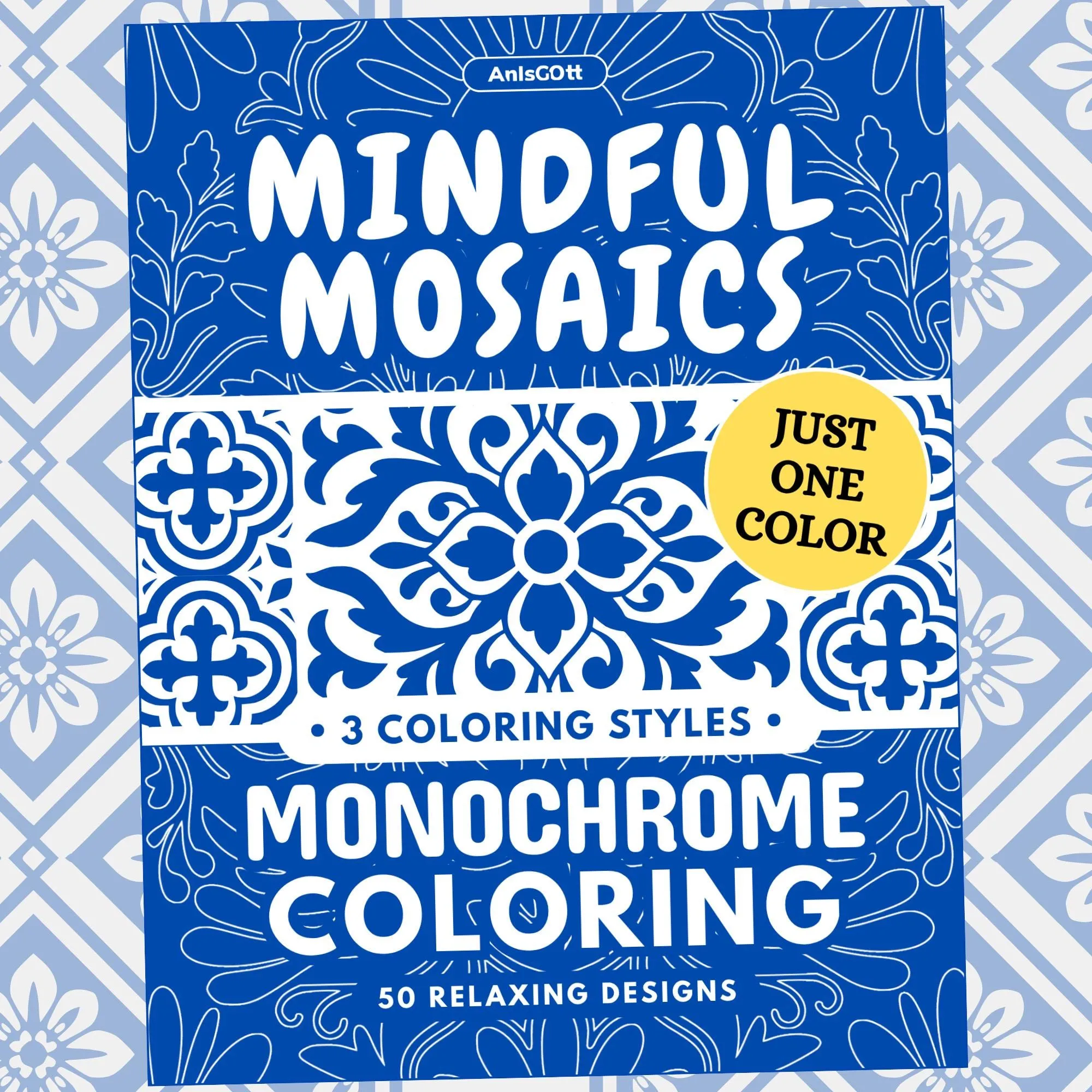
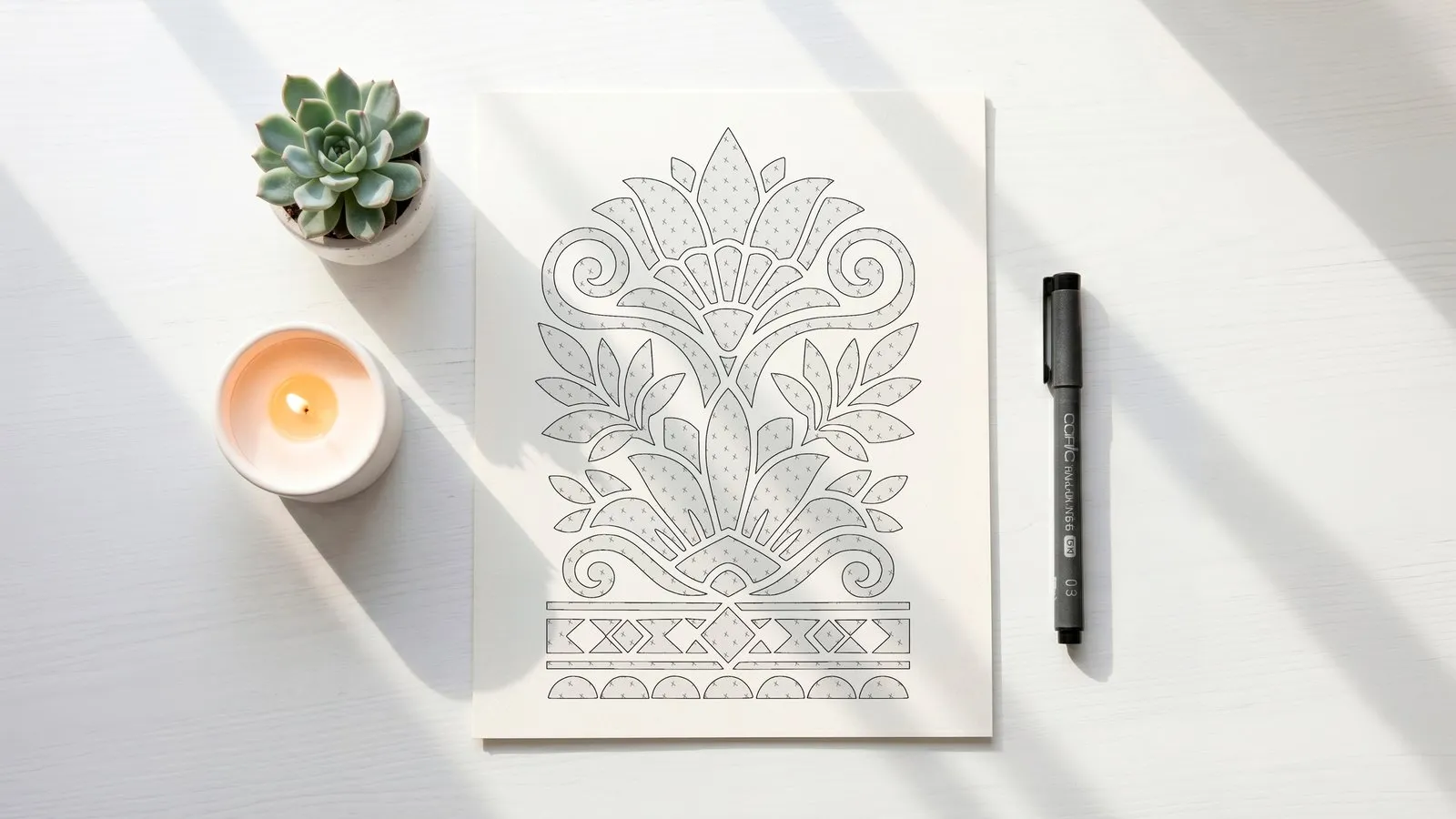
- Mindful Mosaics: Ornamental repeating patterns (Damask, Art Deco, and Arabesque). The rhythmic repetition keeps your hands moving while quieting the verbal chatter in your head.
Try it tonight (free download)
You do not need to commit to a full book to see if this works. Start small:
→ Download Your Free 15-Page Starter Kit
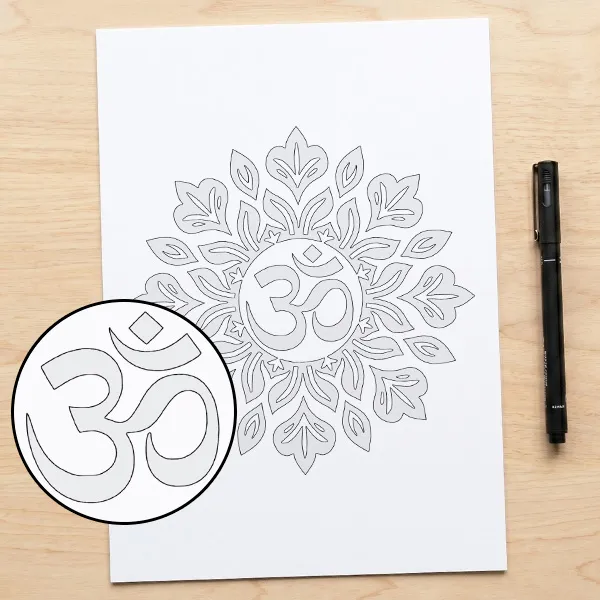
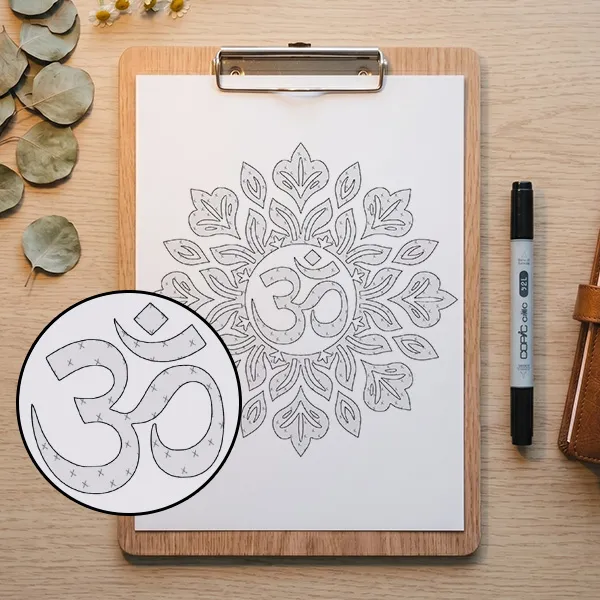
Print one page of your choice (Outline, Shadow, or Pattern guide), select a single marker, light a candle, and give your hands something real to hold instead of your phone tonight.
Frequently asked questions
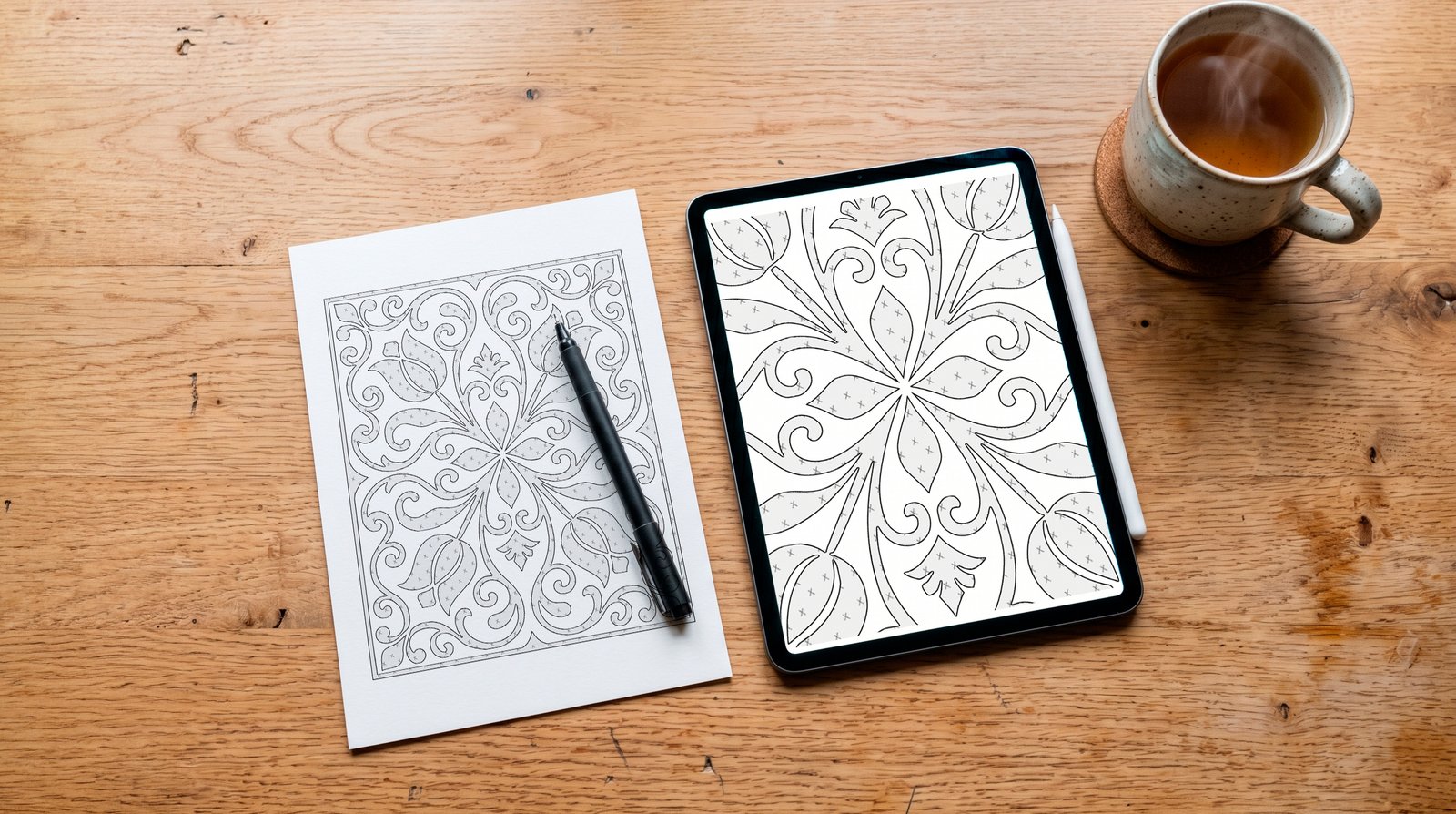
Can I color digitally on my iPad? Yes, but make sure to adjust your settings: lower screen brightness to the minimum, turn on Night Shift (warm color mode), and keep the tablet below eye level to minimize direct light exposure. However, for a true wind-down, physical paper is highly recommended.
What if I get bored or can’t sit still? It usually takes a few minutes of focus for your brain to shift out of “scrolling mode” into a slower rhythm. If 20 minutes feels too long, start with 10. The resistance tends to fade once your hand starts moving.
What if I abandon a page half-colored? There’s no pressure either way. A half-finished page looks fine and will be waiting for you whenever you’re ready to return to it.